Trade
Basic
Futures
Futures
Hundreds of contracts settled in USDT or BTC
TradFi
Gold
Trade global traditional assets with USDT in one place
Options
Hot
Trade European-style vanilla options
Unified Account
Maximize your capital efficiency
Demo Trading
Futures Kickoff
Get prepared for your futures trading
Futures Events
Participate in events to win generous rewards
Demo Trading
Use virtual funds to experience risk-free trading
Earn
Launch
CandyDrop
Collect candies to earn airdrops
Launchpool
Quick staking, earn potential new tokens
HODLer Airdrop
Hold GT and get massive airdrops for free
Launchpad
Be early to the next big token project
Alpha Points
Trade on-chain assets and enjoy airdrop rewards!
Futures Points
Earn futures points and claim airdrop rewards
Investment
Simple Earn
Earn interests with idle tokens
Auto-Invest
Auto-invest on a regular basis
Dual Investment
Buy low and sell high to take profits from price fluctuations
Soft Staking
Earn rewards with flexible staking
Crypto Loan
0 Fees
Pledge one crypto to borrow another
Lending Center
One-stop lending hub
VIP Wealth Hub
Customized wealth management empowers your assets growth
Private Wealth Management
Customized asset management to grow your digital assets
Quant Fund
Top asset management team helps you profit without hassle
Staking
Stake cryptos to earn in PoS products
Smart Leverage
New
No forced liquidation before maturity, worry-free leveraged gains
GUSD Minting
Use USDT/USDC to mint GUSD for treasury-level yields

More


Featured Courses
More
Advanced
Tools That Help You Trade Better: Moving Averages, Trend Lines, and Indicators
There are no trading rules that are applicable to any scenario. These courses will help you establish your own trading strategy, then test it and improve on it in practice

Intermediate
Technical Analysis: A Useful Tool to Understand Trends in Futures Trading
Learn to interpret candlestick patterns and identify market trends. Build a technical analysis system to make informed trading decisions.

Intermediate
Introduction to Meme Tokens
Are you interested in learning about the fascinating world of meme coins? Whether you're a newcomer to cryptocurrency or a seasoned investor, meme coins have taken the world by storm and are making headlines across the globe. This course will provide you with an in-depth understanding of meme coins, including their history, token utility, community analysis, and future developments. Get ready to explore the exciting and unpredictable world of meme coins!
Learn by Topic
Topics
TradFi
The Latest News
Ürün Eğitim Videoları
Marka Videoları
Platformda Öne Çıkanlar
Gate Özel Varlık Yönetimi
BNB Chain
Kripto Kartları
DApp
Protokoller
Base
Tron
Yeni Başlayanlar İçin Web3
Perp DEX
Yatırım Haberleri
Haftalık Rapor
Gate Ventures
Derinlemesine Araştırma
VIP Günlük Sektör Raporu
Pi Network
XRP
Popüler Hikayeler
ETF
VIP Haftalık Sektör Raporu
İşlem Botları
Piyasa Tahmini
Günlük Rapor
Video
Hızlı Okumalar
Opsiyons
Zincir Soyutlama
Sui Ekosistemi
P2P
Güncel Konular
Mining
Ödemeler
Solana
Katman 2
TON Ekosistemi
Araştırma
CryptoPulse
Proje Analizi
Güvenlik
Gate Ürünleri
Airdrop
Kripto Araçları
Restaking
Sıfır Bilgi Kanıtı
Modüler Blok Zincirleri
RWA
Finans
Likit Staking
Stablecoin
DePin
SocialFi
AI
Meme
Teknoloji
Inscription
Cüzdanlar
Makro Trendler
DAO
GameFi
BRC-20
Kantitatif İşlem
Vadeli
Altcoin'ler
Eğitici
Alım Satım
NFT
Metaverse
Ethereum
DeFi
Blok zinciri
Bitcoin
Difficulty
Beginner
Intermediate
Advanced
Latest Courses
More
00:10:27
Beginner
Bitcoin Fundamental (Video)
Bitcoin is the most representative cryptocurrency, which represents the rise and fall of the cryptocurrency market and has witnessed history. A deep understanding of all aspects of Bitcoin is the first step into the cryptocurrency market

Intermediate
Exploring Efficient and Low-Cost Web3 Infrastructure
The rapid growth of Web3 in recent years has accelerated the demand for more efficient and scalable infrastructure. From public blockchains and Layer 2 networks to data availability layers and modular architectures, the ecosystem is moving from experimentation toward real-world deployment. This course will guide you through the core concepts, fundamental technologies, and the evolving landscape of modern (efficient and low-cost) Web3 infrastructure. You will learn how to evaluate whether a network's performance design is sound, how cost structures influence application development, and the potential directions for the next generation of decentralized infrastructure.
Intermediate
The Rise of Crypto Payments: How On-Chain Finance Enters Daily Life
Over more than a decade of blockchain evolving from concept to reality, crypto payments have become a crucial bridge connecting the digital world with the real economy. This course, "The Rise of Crypto Payments: How On-Chain Finance Enters Everyday Life", aims to guide you, starting from an investment perspective, to understand how cryptocurrencies are transforming from assets into currencies. They are no longer merely speculative tools in financial markets but are becoming the new infrastructure reshaping the global payment system. Through a blend of technology, regulatory frameworks, and real-world case studies, we explore why payments represent the most natural—and most transformative—entry point for the Web3 ecosystem.
Latest Articles
More
Beginner
PI Mining vs Bitcoin Mining: Fundamental Differences in Crypto Network Participation
PI mining and BTC mining are both mechanisms for participating in crypto networks and earning native tokens, which is why they are often discussed in the same context.
2026-02-11 07:05:19

Beginner
How TradFi Is Evolving: Tokenization, RWAs, and Crypto Integration
Traditional finance (TradFi) is undergoing a structural transformation.
2026-02-11 06:48:32
Beginner
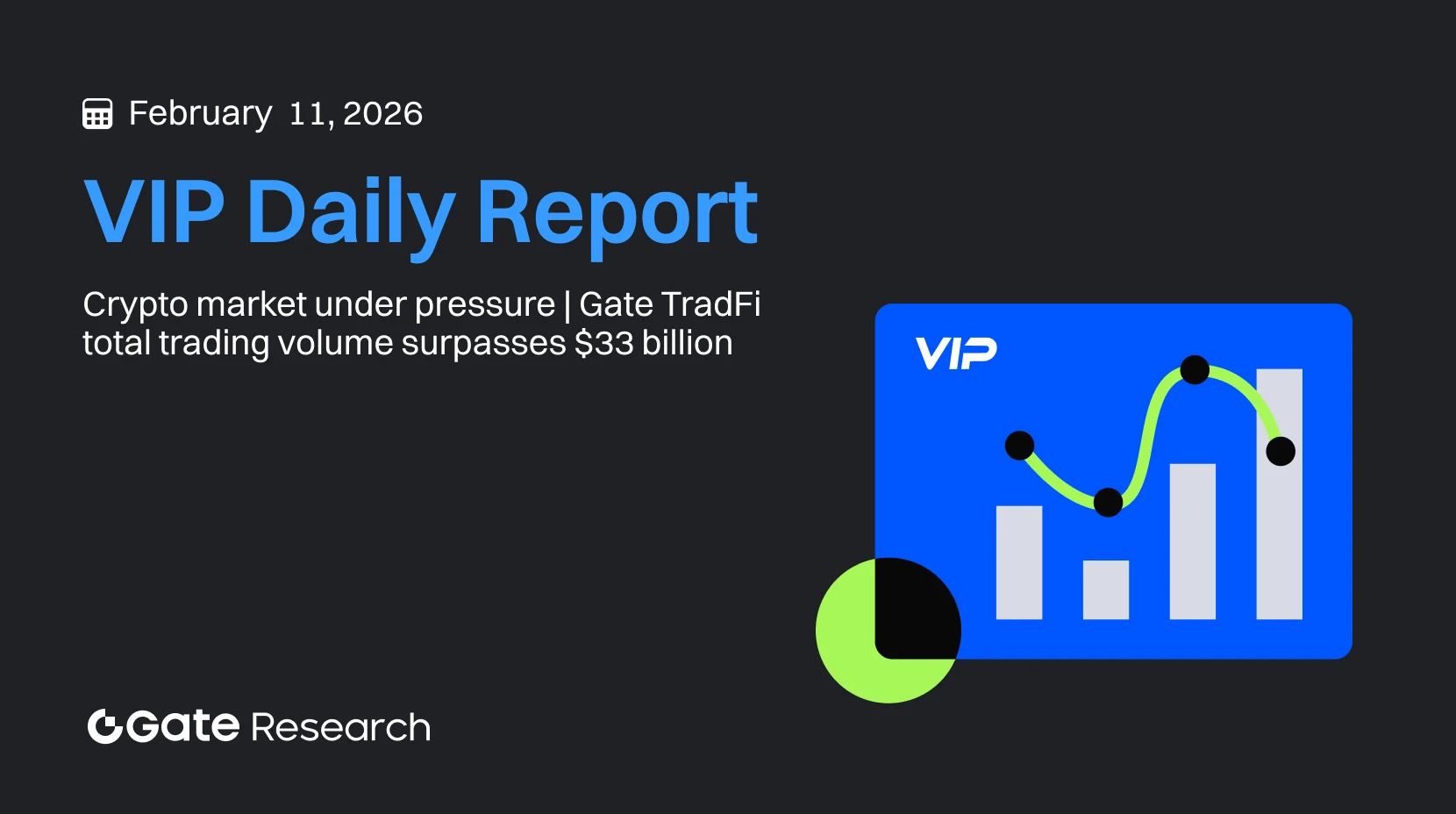
Gate Research: Crypto Market Under Pressure | Gate TradFi Total Trading Volume Surpasses $33 Billion
Gate Research: On February 11, the crypto market remained under downward pressure, with major assets trading in a weak consolidation range as BTC and ETH hovered at elevated levels without clear directional momentum. On the thematic front, capital continued to rotate into high-narrative trades: POWER surged on strong volume driven by the Web3 incentive-layer narrative and ecosystem partnership developments; PIPPIN rebounded sharply on the back of AI creator IP momentum and sentiment recovery; while SONIC strengthened amid the SVM expansion narrative and intensified community exposure. Structurally, the tokenized Treasury market surpassed $10 billion in size, reinforcing RWA’s role as a foundational asset within on-chain finance, while Gate TradFi’s cumulative trading volume exceeded $33 billion.
2026-02-11 06:44:24
Latest Research
More
Advanced
Gate Research: Robinhood Launches Financial-Grade Layer 2 | Gate TradFi Total Trading Volume Surpasses $33 Billion
Gate Research Daily Report: On February 11, the crypto market remained under downward pressure, with major assets trading in a weak consolidation range as BTC and ETH hovered at elevated levels without clear directional momentum. On the thematic front, capital continued to rotate into high-narrative trades: POWER surged on strong volume driven by the Web3 incentive-layer narrative and ecosystem partnership developments; PIPPIN rebounded sharply on the back of AI creator IP momentum and sentiment recovery; while SONIC strengthened amid the SVM expansion narrative and intensified community exposure. Structurally, the tokenized Treasury market surpassed $10 billion in size, reinforcing RWA’s role as a foundational asset within on-chain finance, while Gate TradFi’s cumulative trading volume exceeded $33 billion.
2026-02-11 05:49:41
Advanced
 Gate Research: H Surges 42%; RWA Perp DEX Volume Hits a New High | Weekly Report for Gate VIPs (Feb 2–Feb 8, 2026)
Gate Research: Over the past week, BTC entered a low-level consolidation and recovery phase following a sharp sell-off. The rebound has been capped by weak momentum and insufficient volume, pointing to a technical rebound rather than a trend reversal. ETH recorded a larger weekly decline than BTC, with deleveraging pressure more concentrated. By contrast, H has surged approximately 41.94% over the past seven days, emerging as the standout outperformer of this cycle. Meanwhile, on-chain capital flows over the past week have shown clear signs of one-sided concentration and deleveraging. Triggered by the sharp market downturn, Aave whales moved to repay loans and top up collateral under liquidation pressure, driving stablecoins and settlement capital back to the Ethereum mainnet and resulting in net inflows of approximately USD 1.1 billion.
2026-02-10 09:21:18
Advanced
Gate Research: Bitcoin Selling Pressure Eases Temporarily | Crypto Market Structure Bill May Pass Within Months
Gate Research Daily Report: Bitcoin’s $69,000–$71,000 range is the key zone for bulls to validate the sustainability of the rebound. Ethereum is gradually stabilizing at lower levels, with MACD turning bullish and price moving toward the upper Bollinger Band, signaling a clearer short-term technical recovery. News circulating on X has intensified retail FOMO, driving ZKP up 32.80% over the past 24 hours, while SAFFRONFI surged more than 40%, mainly due to increased short-term trading activity. Bitcoin selling pressure has temporarily eased, but a durable market recovery will require a revival in spot demand. A crypto market structure bill may pass within the next few months, with stablecoin yields emerging as the key point of contention. Meanwhile, Jump Trading plans to exchange liquidity provision for minority equity stakes in Kalshi and Polymarket.
2026-02-10 06:13:18
Glossary
Moreapr
Annual Percentage Rate (APR) represents the yearly yield or cost as a simple interest rate, excluding the effects of compounding interest. You will commonly see the APR label on exchange savings products, DeFi lending platforms, and staking pages. Understanding APR helps you estimate returns based on the number of days held, compare different products, and determine whether compound interest or lock-up rules apply.
fomo
Fear of Missing Out (FOMO) refers to the psychological phenomenon where individuals, upon witnessing others profit or seeing a sudden surge in market trends, become anxious about being left behind and rush to participate. This behavior is common in crypto trading, Initial Exchange Offerings (IEOs), NFT minting, and airdrop claims. FOMO can drive up trading volume and market volatility, while also amplifying the risk of losses. Understanding and managing FOMO is essential for beginners to avoid impulsive buying during price surges and panic selling during downturns.
nft
An NFT (Non-Fungible Token) is a unique certificate recorded on the blockchain that represents ownership and attributes of a specific digital work or on-chain asset. NFTs are minted by smart contracts, which also store their metadata. Unlike fungible tokens, NFTs are indivisible and cannot be exchanged on a one-to-one basis. They are commonly used in digital art, in-game items, event tickets, and membership passes, enabling proof of ownership, provenance tracking, and trading. Some platforms also support creator royalties and cross-chain display of NFTs.
leverage
Leverage refers to the practice of using a small amount of personal capital as margin to amplify your available trading or investment funds. This allows you to take larger positions with limited initial capital. In the crypto market, leverage is commonly seen in perpetual contracts, leveraged tokens, and DeFi collateralized lending. It can enhance capital efficiency and improve hedging strategies, but also introduces risks such as forced liquidation, funding rates, and increased price volatility. Proper risk management and stop-loss mechanisms are essential when using leverage.



Your Gateway to Crypto World, Subscribe to Gate for a New Perspective