

Trade
Basic
Futures
Futures
Hundreds of contracts settled in USDT or BTC
TradFi
Gold
Trade global traditional assets with USDT in one place
Options
Hot
Trade European-style vanilla options
Unified Account
Maximize your capital efficiency
Demo Trading
Futures Kickoff
Get prepared for your futures trading
Futures Events
Participate in events to win generous rewards
Demo Trading
Use virtual funds to experience risk-free trading
Earn
Launch
CandyDrop
Collect candies to earn airdrops
Launchpool
Quick staking, earn potential new tokens
HODLer Airdrop
Hold GT and get massive airdrops for free
Launchpad
Be early to the next big token project
Alpha Points
Trade on-chain assets and enjoy airdrop rewards!
Futures Points
Earn futures points and claim airdrop rewards
Investment
Simple Earn
Earn interests with idle tokens
Auto-Invest
Auto-invest on a regular basis
Dual Investment
Buy low and sell high to take profits from price fluctuations
Soft Staking
Earn rewards with flexible staking
Crypto Loan
0 Fees
Pledge one crypto to borrow another
Lending Center
One-stop lending hub
VIP Wealth Hub
Customized wealth management empowers your assets growth
Private Wealth Management
Customized asset management to grow your digital assets
Quant Fund
Top asset management team helps you profit without hassle
Staking
Stake cryptos to earn in PoS products
Smart Leverage
New
No forced liquidation before maturity, worry-free leveraged gains
GUSD Minting
Use USDT/USDC to mint GUSD for treasury-level yields

More





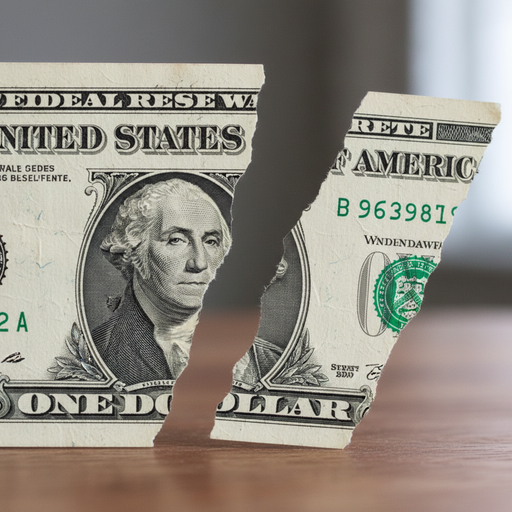

Bear Put Option Trading Practical Guide | How to Use Put Option Strategies for Risk Hedging and Profit
In the financial markets, options trading is an essential tool for investors to allocate assets and manage risk. Especially when you anticipate that the price of an asset will decline, put options become a powerful choice. Whether you aim to profit from market downturns or want to hedge your existing holdings, understanding how put options work is crucial. This article will guide you through this trading instrument and how to apply it flexibly in practice.
Quick Overview of Put Options | Fundamental Concepts Every Trader Should Know
A put option is essentially a derivative contract that grants the holder the right, but not the obligation, to sell the underlying asset (such as cryptocurrency or stock) at a predetermined “strike price” within a specific period. The key word here is “right,” not “obligation”—you can choose to exercise this right or to forgo it.
Specifically, when you purchase a put option, you pay a fee called the “premium.” This premium is relatively small but grants you the right to sell the asset at the strike price until the contract expires. Conversely, a call option gives the holder the right to buy, not sell, which is logically the opposite.
The flexibility of put options lies in the fact that you can exercise the right at any time before expiration or sell the contract to other traders. This means that as your market expectations change and you find a willing buyer, you can exit the position at any time.
How Put Options Generate Profits | Understanding Profit Logic Through Trading Examples
The most straightforward way to understand how put options profit is through a concrete trading example.
Suppose you buy a put option for a premium of $0.80, with a strike price of $30. At the time of purchase, the market price of the underlying asset (say, a certain cryptocurrency) is around $30.
Now, the market begins to decline. At expiration, the asset’s price has fallen to $25. Your put option is now “in the money,” with real value. You can buy at the strike price of $30 and immediately sell at that price, or sell the contract to another trader—its market value at this point is approximately $5 (strike $30 minus current market $25).
After deducting the initial premium of $0.80, your net profit is $4.20—this is the profit brought by the put option. Compared to shorting the asset directly or other risk strategies, you only need a small initial investment to leverage a profit much larger than the cost.
Conversely, if the price does not decline but instead rises to $35, your put option will expire worthless—no one will buy the asset at $30 when the market price is $35. In this case, you only lose the initial premium of $0.80. In other words, your risk is limited to this premium, not unlimited.
Core Advantages of Buying Put Options | Why Traders Favor This Strategy
The main appeal of buying put options lies in their unique risk-reward structure.
First, cost efficiency. You only need to pay a relatively small premium to control an asset worth much more than that premium. This leverage can generate significant returns during market declines. Many professional traders use this approach to quickly accumulate put positions when expecting a market correction.
Second, limited risk. Unlike short selling, the maximum risk when buying a put option is the premium paid. Even if the market moves against your prediction, you won’t face unlimited losses. This makes put options an ideal tool for conservative investors to manage risk.
Third, flexible hedging. Investors holding certain assets can buy corresponding put options to minimize losses during a market crash. It’s like purchasing “downside insurance” for your portfolio—when the market is stable, you only lose a small premium; during sharp declines, the value of the options rises rapidly, offsetting or partially offsetting losses in your main holdings.
Fourth, sale flexibility. You can choose to hold the option until expiration or sell it to other traders at any time. This provides opportunities for early profit-taking or loss-cutting without waiting for the contract to expire naturally.
Risks and Limitations of Put Options | Understanding the Other Side of Trading
Although put options offer many advantages, traders must also recognize their inherent risks and limitations.
Market prediction risk. If your market forecast is wrong and the price does not decline as expected, your put option will gradually lose value. As expiration approaches, time value decays, accelerating the loss of value. In extreme cases, the purchased options may expire worthless, and the entire premium paid will be lost.
Time decay effect. Like all options, put options experience “time value.” As the expiration date nears, even if the price remains unchanged or moves unfavorably, the option’s value will naturally decline. This means you need the market to move in your predicted direction quickly to profit before time decay erodes the value.
Market volatility uncertainty. The value of put options depends not only on the underlying asset’s price movement but also on market implied volatility. During calm market periods, even if your directional prediction is correct, the increase in option value may be less than expected.
Significant seller risks. If you are the seller (writer) of a put option rather than the buyer, the risk profile is completely reversed. Sellers face potentially unlimited losses, especially during sharp market declines. Therefore, the risk management strategies for buyers and sellers are entirely different.
Put Options vs Other Risk Management Tools | Choosing the Right Trading Strategy
In actual trading, put options are not the only downward strategy tools. Understanding their differences from other instruments can help you make smarter choices.
Put options vs call options
They are two sides of the same coin. Call options give the right to buy, suitable when you expect prices to rise; put options give the right to sell, suitable when you expect prices to fall. Their operation principles are similar—both require paying premiums, have strike prices and expiration dates, and face time decay and volatility risks. The fundamental difference is the market direction they bet on: one on upward movement, the other on downward. The risk types are similar but manifest in opposite directions.
Put options vs short selling
Short selling involves selling assets you do not own by borrowing from the market, betting on a decline. It also is a downward strategy.
The main difference is obligation. When you buy a put, you have the option but not the obligation—at expiration, you can choose not to exercise, risking only the premium. When you short, you have an obligation to buy back the asset later and return it. If the market rises sharply against you, your losses can be unlimited.
From a cost perspective, buying a put requires paying a premium but protects against unlimited losses; short selling does not require a premium but exposes you to potentially unlimited risk. Additionally, short selling involves borrowing assets and associated costs, while buying puts does not.
Market psychology also differs: short selling signals a bearish outlook, and if many traders short the same asset, it can reinforce expectations of a decline. Put options are more discreet and do not directly influence market price discovery.
Is a Put Option Right for You? | Making the Right Strategy Choice
Deciding whether put options suit your trading strategy depends on several factors.
If you have a clear bearish outlook and want to respond with limited initial investment, put options are effective. They are especially useful when you expect significant short-term declines or volatility, as their leverage can amplify gains.
If you already hold an asset and want to hedge against downside risk, buying puts can provide “insurance” at a relatively low cost. Even if the asset remains stable or rises, your loss is limited to the premium paid.
Conversely, if your market outlook is uncertain or your trading horizon is long-term, put options may not be optimal. The time decay means they are better suited for short- to medium-term trades rather than long-term holdings.
Finally, any trading strategy should be based on your personal risk tolerance, capital size, and experience. While buying puts limits maximum loss, it still requires accurate market judgment—frequent incorrect predictions can lead to accumulating losses.
Before using put options, conduct thorough market research, develop a clear trading plan, and set specific profit and stop-loss levels. Only then can put options become a powerful tool for risk management and profit enhancement.