

Trade
Basic
Futures
Futures
Hundreds of contracts settled in USDT or BTC
TradFi
Gold
Trade global traditional assets with USDT in one place
Options
Hot
Trade European-style vanilla options
Unified Account
Maximize your capital efficiency
Demo Trading
Futures Kickoff
Get prepared for your futures trading
Futures Events
Participate in events to win generous rewards
Demo Trading
Use virtual funds to experience risk-free trading
Earn
Launch
CandyDrop
Collect candies to earn airdrops
Launchpool
Quick staking, earn potential new tokens
HODLer Airdrop
Hold GT and get massive airdrops for free
Launchpad
Be early to the next big token project
Alpha Points
Trade on-chain assets and enjoy airdrop rewards!
Futures Points
Earn futures points and claim airdrop rewards
Investment
Simple Earn
Earn interests with idle tokens
Auto-Invest
Auto-invest on a regular basis
Dual Investment
Buy low and sell high to take profits from price fluctuations
Soft Staking
Earn rewards with flexible staking
Crypto Loan
0 Fees
Pledge one crypto to borrow another
Lending Center
One-stop lending hub
VIP Wealth Hub
Customized wealth management empowers your assets growth
Private Wealth Management
Customized asset management to grow your digital assets
Quant Fund
Top asset management team helps you profit without hassle
Staking
Stake cryptos to earn in PoS products
Smart Leverage
New
No forced liquidation before maturity, worry-free leveraged gains
GUSD Minting
Use USDT/USDC to mint GUSD for treasury-level yields

More





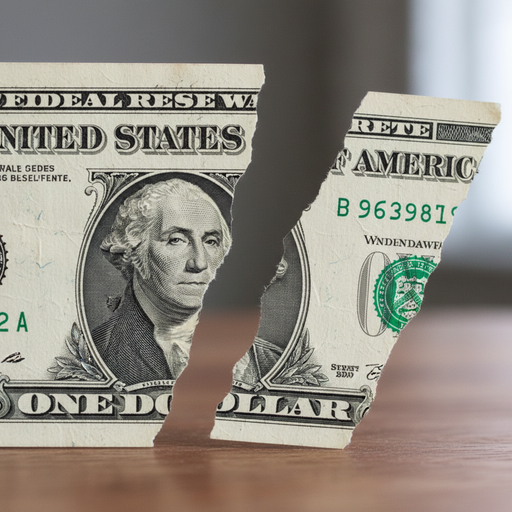

The 7 Dimensions of Crypto Wealth: From Divisibility to Digital Prosperity
Generating income with digital assets is no longer an exclusive dream of technologists and speculators. By 2026, from small investors to large institutions, all are converging in a decentralized ecosystem that offers multiple paths to profitability. With expanding market capitalization and over 650 million active users, cryptocurrencies have established themselves as a legitimate asset class. But here’s the fascinating part: one of their greatest superpowers is divisibility, which democratizes access in an unprecedented way in financial history.
You don’t need a whole Bitcoin to participate. You don’t even need a thousand euros. The very architecture of these digital currencies allows them to be broken into microscopic units, opening opportunities to anyone, regardless of initial capital. This article explores how to leverage this unique feature to build wealth from any starting point.
Understanding divisibility: Your gateway to the crypto ecosystem
Let’s imagine the traditional stock market. To buy shares of a company, you typically need enough capital to purchase at least one full share. But in cryptocurrencies, especially Bitcoin, the picture is radically different. Bitcoin is divisible into 100 million units called satoshis (1 satoshi = 0.00000001 BTC). Ethereum allows even smaller divisions.
This divisibility by decimals is revolutionary because it removes one of the biggest entry barriers: the amount of capital required. With just 10 euros, you can own fractions of Bitcoin or Ethereum. With 50 euros, you can have a diversified portfolio with exposure to multiple assets in the top 10. The technical architecture of these coins imposes no limit on access; only you decide how much to participate.
While a decade ago you needed thousands of euros to “get into” Bitcoin, today anyone with a smartphone and an internet connection can start. That democratization is perhaps the most profound change cryptocurrencies have brought to global financial accessibility.
Multiple ways to profit: There’s no single formula
The current crypto ecosystem is mature enough to offer options tailored to each profile. It’s not the same what a professional who spends hours daily on technical analysis seeks, as someone looking for passive income with minimal effort.
Active trading vs. Patient accumulation
Short-term approach — known as trading — attracts those seeking to capitalize on volatility. Speculating on price movements through day trading, scalping, or swing trading can generate returns of 5-10% per month if executed correctly. However, the reality is less glamorous: most traders lose money, especially at the start. The extreme volatility of these assets can change the landscape in seconds.
Long-term approach — popularly known as HODL (Hold On for Dear Life) — remains the proven winning strategy. Investors who bought Bitcoin in 2017 and continued accumulating through years of 80% drops are now multimillionaires. Not by luck, but by conviction and patience. The Winklevoss twins invested 11 million dollars when Bitcoin was worth just $120 in 2013. Everyone called them crazy. Today, that investment is worth exponentially more.
Generating passive income
Staking represents a paradigm shift. Locking your cryptos in a Proof-of-Stake network (Ethereum, Solana, Cardano) allows you to earn annual rewards of 3% to 10% without actively doing anything. It’s akin to receiving dividends from stocks or interest from a bank deposit, but with significantly higher yields.
Decentralized Finance (DeFi) takes this further. Providing liquidity to automated pools on decentralized exchanges can generate astronomical returns on new projects, though with proportional risks (especially due to “impermanent loss”).
Capturing value without initial investment
Airdrops present unique opportunities. Users who simply used Uniswap in 2020 received 400 UNI tokens for free. At their peak, those tokens were worth over $16,000. The capital required: zero euros. Only your time and attention.
Understanding the current landscape: Is 2026 a good time?
The crypto market operates in cycles. Between euphoria and panic, between overflowing optimism and despair, there are predictable patterns. Unlike 2017 or 2021 — when reckless speculation dominated the market — today’s ecosystem is different.
The entry of institutional capital
Since 2024-2025, we’ve seen the approval of spot Bitcoin ETFs in major markets. BlackRock, Fidelity, and VanEck — giants managing trillions — now recommend exposure to cryptocurrencies. This fundamentally changed volatility: daily moves of 10-15% are less frequent. In exchange, we gain stability and legitimacy.
These investors’ vision isn’t to speculate on tomorrow’s price. It’s to recognize that blockchain technology will make global transactions more efficient, cheaper, and faster. That’s the core thesis.
The macroeconomic context
With governments increasing debt, central banks injecting liquidity, and persistent inflation in many regions, Bitcoin positions itself as “digital gold.” Legendary investors like Paul Tudor Jones explicitly compare it to gold as a hedge against fiat currency depreciation.
The polarization of projects
Vitalik Buterin and other leaders emphasize a critical point: only projects that provide real utility will survive, not mere speculative tokens. This means the crypto universe is evolving toward a bifurcation: established projects with solid fundamentals (Bitcoin, Ethereum, Solana) versus short-lived speculative altcoins.
Timing conclusion: If your horizon is long-term and you employ Dollar Cost Averaging (investing fixed amounts regularly), the timing is always right. Current prices reflect greater uncertainty, but that very uncertainty creates opportunities.
Risk classification: Find your balance point
Not all investment methods are equal. The fundamental rule: the higher the potential return, the higher the risk.
Conservative strategies (3-5% annual return): Staking stablecoins like USDC or holding Bitcoin/Ethereum long-term. Low risk because you trust in the survival of established projects.
Moderate strategies (10-20% annual return): Providing liquidity in pools, investing in top 10 cryptos, swing trading. Require more attention but offer a balanced approach.
Speculative strategies (potential 100%+ returns, but with total loss risk): Leveraged trading, memecoins, new unverified DeFi projects, IDOs. Only for those who sleep peacefully with portfolios down 50% in a week.
Key question: Can you lose all the money you invest today tomorrow without it changing your life? If the answer is no, avoid speculative methods.
The seven routes to prosperity: Specific methods
1. Short-term trading
Speculating on price movements. With BTC at $66,410 and ETH at $1,940, traders seek daily oscillations. Potential: 5-10% monthly with proper execution. Risk: most lose money initially. Key: education in technical analysis, emotional discipline, and never use leverage when starting.
2. Long-term accumulation (HODL)
Buy Bitcoin at $66K or Ethereum at $1.94K with the conviction that in 5-10 years they will have tripled. The DCA (Dollar Cost Averaging) strategy minimizes risk: invest $20 USD in BTC weekly, regardless of price. Then forget about it for years. This has worked consistently since 2009.
3. Asset staking
Lock your holdings in Proof-of-Stake networks and earn 3-10% annually. With 32 ETH staked, you generate about 1 ETH extra per year. Low risk, steady income.
4. Liquidity provision (Liquidity Farming)
Add two assets to a decentralized pool (e.g., USDC + ETH) and earn trading fees. Yields can be 20-50% annually, but with “impermanent loss” risk. Start only with stable pools (USDC paired).
5. Capturing airdrops
Participate in testing new protocols, use emerging platforms. Some airdrops are worth thousands. Cost: your time. Capital: zero.
6. NFT market
Buy digital art expecting to resell at a higher price. Highly speculative. Requires understanding community dynamics. Some buyers have 100x their money; others lost everything.
7. Play-to-Earn
Play blockchain-based video games and earn tokens. In emerging markets, it has generated full-time income. In developed economies, supplementary income. Risk: most of these games have unsustainable economies long-term.
Principles to maximize gains and minimize losses
Risk vs. Reward: The unbreakable relationship
In finance, nobody gives away free money. If a strategy promises exorbitant returns, the risk is proportional. Bitcoin yields modestly because it’s safe. New altcoins offer 300% returns in weeks because they could disappear tomorrow.
Professional traders profit by “surfing” this volatility, exploiting hype and panic waves. But it requires timing, experience, and nerves of steel.
Tokenomics: The fundamental basis
It’s not the same to invest in Bitcoin (21 million maximum coins, guaranteed scarcity) as in a token that prints millions daily (inflationary, downward pressure). Projects with “solid tokenomics” (limited supply, clear utility) tend to appreciate long-term. Those without tend to vanish.
Market psychology: The biggest enemy
Volatility is driven more by fear (FUD) and greed (FOMO) than by technology. Experts recommend doing the opposite of the crowd: buy when panic dominates, sell when euphoria peaks. Large investors use dips to accumulate, knowing the cycle will eventually turn.
How to start with little capital: The magic of divisibility
The beauty of cryptocurrencies is that their inherent divisibility removes entry barriers. You don’t need $66K to buy 1 BTC. You can buy $10 USD worth of Bitcoin today, $10 next week, and so on, building a significant position over time.
Start with 10-20 euros
Most exchanges allow minimum deposits of $10-20 USD. With that amount, you already have exposure to Bitcoin, Ethereum, or USDC. Small but real.
Implement Dollar Cost Averaging
Instead of waiting to “hit” the low price (impossible), invest $20 USD weekly, monthly, or daily. This automatically creates a competitive average purchase price. It’s the smartest way to invest with little money.
Build a solid base first
Before jumping into speculative altcoins, establish positions in Bitcoin ($66.41K current) and Ethereum ($1.94K current). They are the assets with the highest probability of long-term survival. Then, allocate a smaller percentage to experiment.
Learn in “simulation mode”
If you lose $15 USD sending funds to the wrong network, it’s a cheap lesson. If you lose $10,000 USD, it’s a tragedy. Use simulators, testnets, small amounts. Scale up when you feel technically comfortable.
Monitor fees
With small investments, exchange fees can eat into your gains. Look for platforms with affordable fees (typically 0.1% per trade).
Practical guide: Steps to get started
Step 1: Choose a secure platform
You need a centralized exchange with independent reserve audits (Proof of Reserves), SAFU guarantee funds, and good liquidity. Enable 2FA with Google Authenticator.
Step 2: Complete KYC verification
Identification is mandatory. Protects against hackers and ensures you operate in a legitimate environment.
Step 3: Define your strategy before investing
Ask yourself:
A plan prevents impulsive decisions (the worst enemy in crypto).
Step 4: Invest only what you can afford to lose
Golden rule: if you lose all your crypto capital tomorrow, does it affect your life? If yes, don’t invest that amount.
Step 5: Diversify intelligently
Resist the temptation to bet everything on the “hot coin with x100 potential.” That’s lottery, not investment. Build with 50-60% Bitcoin, 20-30% Ethereum, 10-20% selected altcoins.
Step 6: Scale gradually
As you gain experience and technical confidence, increase positions. Early experience with small amounts is an investment in education.
Tax and security considerations: Legal realities
Tax obligations in Spain
Security: Three fundamental rules
In crypto: maximum freedom, maximum personal responsibility.
Real cases: Lessons from winners and losers
The patient twins: From $120 to fortune
The Winklevoss invested $11 million in Bitcoin when it was $120 each in 2013. They endured 80% drops without selling. Today, their patience and conviction make them multimillionaires. Lesson: long-term vision beats short-term speculation.
Uniswap early users: Rewards for early exploration
Those who used Uniswap in 2020 (before it became famous) received 400 UNI tokens for free. Worth $1,200 then. Months later, those tokens were worth $16,000. Lesson: being early in new technology pays off.
The “Dogecoin Millionaire”: Lesson in profit management
An investor mortgaged his house to buy Dogecoin just before Elon Musk appeared on Saturday Night Live. Reached millions in portfolio value. But he didn’t sell, expecting more gains. The price plummeted. He lost his opportunity. Lesson: you earn nothing until you convert to euros; exit management is critical.
Expert forecasts: Consensus for 2026
Unstoppable institutionalization
Executives from BlackRock, Fidelity, and VanEck actively recommend crypto. It’s not speculation; it’s recognition that blockchain improves global financial efficiency.
Regulation as facilitator, not enemy
Clear legal frameworks (like MiCA in Europe) eliminate uncertainty and allow massive capital inflows without legal fears.
Bitcoin as a reserve asset
In a world with persistent inflation and rising public debt, holding a scarce, decentralized asset adds value to any portfolio.
Crypto Darwinism: Only the useful survive
Projects with real utility (Ethereum, Solana, Cardano) will likely persist. Memecoins and pure speculative tokens will disappear in bear cycles.
Final reflection: Your personalized path
Making money with cryptocurrencies isn’t a one-size-fits-all formula. It’s an ecosystem offering multiple routes:
The divisibility of these assets is your most underestimated superpower. It allows you to start with $10 USD, learn, scale, diversify. Without that feature, millions would be excluded.
The key is to choose responsibly, not with blind enthusiasm. The future of finance is decentralized and accessible. The question is: when do you start your participation?
Note: This content is for educational purposes only. It is not financial advice. Cryptocurrencies are volatile and high-risk assets. Consult with specialized advisors before making investment decisions. Always base financial decisions on your personal situation.