


2026 Public Chain Shake-up! Which of the 40 mainstream public chain projects can survive the bull and bear markets?
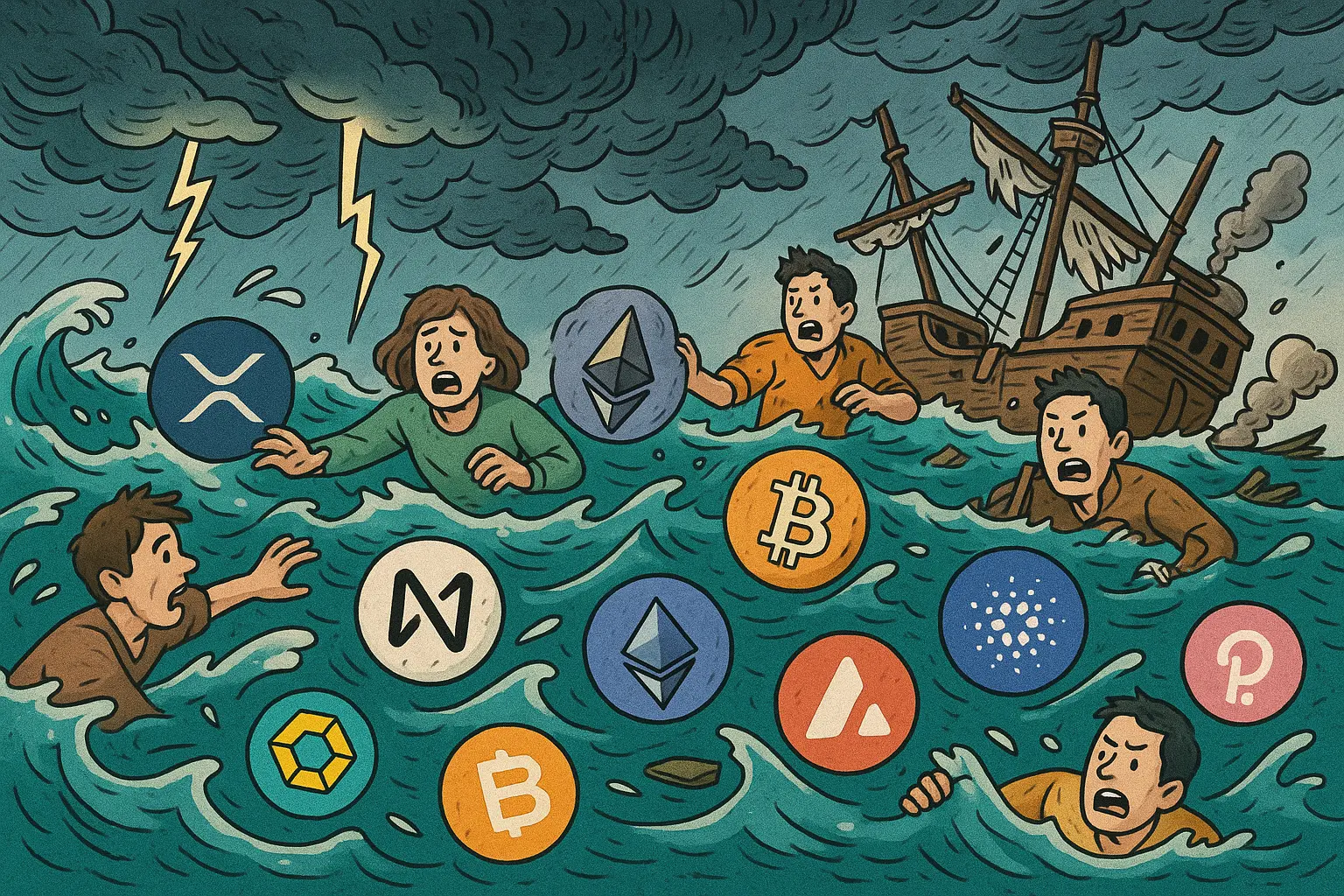
The public chain market in 2025 experienced a complete baptism from Meme frenzy to October’s major liquidation. Solana led with $642 million in transaction fees, Hyperliquid’s perpetual contracts emerged strongly, and MemeCore tokens surged 97.67% to take the top spot. As we enter the 2026 bull-bear transition, public chains that can navigate the cycle need to possess three core capabilities: sustained revenue, ecological resilience, and technological innovation.
Transaction fees are the ultimate test of a public chain’s ability to survive bull and bear markets
When it comes to investing in public chains, most focus on TVL and token price increases, but the harsh reality of 2025 proves: only transaction fee revenue is the lifeline for a public chain to survive bull and bear markets. TVL can be accumulated through subsidies, users can be attracted via airdrops, but only transaction fees reflect real usage intensity and willingness to pay.
In 2025, Solana set a record with $642 million in transaction fees, not only ranking first but also creating a steep gap with the second tier. This leadership is not from a single event but built on multiple factors such as high-frequency trading, active DEX ecosystems, and dense Meme and bot trading activity. On January 19, the day TRUMP Meme was released, Solana recorded its annual single-day transaction fee peak, with SOL price reaching $293 at one point. Behind this “single-day wealth creation effect” is the network’s sustained, high-turnover real usage.
Hyperliquid’s performance represents another path through the bull-bear cycle: vertical specialization. Its transaction fee scale reached $846 million, second only to Solana, but considering its focus on perpetual contracts, this level already reflects extremely high trading activity and capital turnover efficiency. Hyperliquid internalizes high-frequency derivatives trading as a core economic activity of the public chain, exemplifying a “specialized financial scenario supporting the entire chain.”
Tron demonstrates a third survival strategy: becoming infrastructure. Its transaction fees mainly come from stablecoin transfers and payment transactions. Although individual fees are low, the massive scale of basic transfers ensures steady revenue in 2025. Notably, Tron sharply reduced transaction fees by about 60% at the end of August, sacrificing short-term revenue for long-term market share, a strategy that may become mainstream in 2026’s competitive environment.
Survival strategies of the top five public chains by transaction fees in 2025
Solana ($642 million): High-frequency trading + Meme ecosystem + bot economy, fully catering to speculative demand
Hyperliquid ($846 million): Vertical focus on perpetual contracts, excelling in a single scenario
Tron (top three in transaction fees): Stablecoin settlement infrastructure, lowering fees for scale
Ethereum (still in the top ranks): High-value transactions and complex interactions, strong in capturing unit value
BSC (ATH on October 8): 50% fee reduction to stimulate trading, short-term explosive power
User retention rate exposes the true health of the ecosystem
Transaction fees reflect revenue-generating capacity, while user retention reveals ecological resilience. The harsh data of 2025 shows that among the top ten public chains, only four achieved a retention rate over 100% from the beginning to the end of the year. This indicates that most public chains, after experiencing the Meme hype at the start of the year, failed to convert short-term traffic into long-term users.
BSC is the most noteworthy during the 2026 bull-bear transition. In 2025, aided by a large-scale airdrop campaign with Four.meme, it attracted over 160,000 traders, pushing active addresses to 3.47 million, a 313.94% increase. More importantly, BSC’s annual retention rate was the highest, showing its strong user retention ability while accommodating new traffic. The fee reduction to 0.05 Gwei (about 50% decrease) implemented on October 1 became a key turning point, rapidly amplifying Meme and high-frequency trading behaviors in a low-cost environment.
Polygon achieved user expansion through Polymarket. Its annual active addresses grew significantly, but this growth was not from traditional crypto users; instead, Polymarket successfully attracted many Web2 users. Thanks to excellent UI/UX design and smooth deposit/withdrawal processes, users could complete on-chain interactions with almost no perceptible experience. This “invisible blockchain” strategy may become the mainstream way for public chains to acquire incremental users in 2026.
Conversely, Solana experienced higher attrition within the year, mainly due to the natural correction after Meme hype cooled at the start of the year. Considering the overall market environment, this does not necessarily indicate a weakening Solana ecosystem but rather that the early-year explosion was too concentrated, making it appear less strong in the relative comparison in the second half. This “pulsed” growth pattern is highly explosive in a bull market but requires caution against retracement risks during bull-bear transitions.
Three types of public chains worth long-term allocation in 2026
Based on the full-year data of 2025, public chains capable of surviving bull and bear markets in 2026 can be divided into three categories: stable revenue, technological innovation, and ecosystem explosion.
Stable revenue chains include Solana, Tron, and Hyperliquid. Solana’s high-frequency trading ecosystem is mature, capable of maintaining basic trading volume regardless of market conditions. Tron, as a stablecoin settlement infrastructure, has demand decoupled from speculation cycles. Hyperliquid’s perpetual contracts become more active during market volatility, showing counter-cyclical properties. Even in a bear market, these three chains can sustain considerable transaction fee revenue in 2026.
Technological innovation chains are represented by Monad and Unichain. Monad boasts an 84.32% token yield, ranking third, with mature parallel EVM technology that saw TVL rapidly rise to $226 million by the end of 2025. Unichain, within 30 days from late April to early May, grew its TVL from about $7 million to $784 million, an approximately 11,100% increase. With the advancement of Uniswap v4, Unichain is becoming a direct recipient of protocol-level liquidity spillover. If these technological routes prove successful, 2026 will see valuation re-evaluation.
Ecosystem explosion chains include Ink, World Chain, and MemeCore. Ink, supported by Kraken, saw TVL surge from about $7 million to $273 million within two weeks, a 3,800% increase. World Chain continues to push identity verification, with Nasdaq-listed Eightco Holdings planning to inject $250-270 million. MemeCore, with a 97.67% token increase, took the top spot, having built its own Perp DEX MemeMax and allocated $300 million in ecosystem grants, locking Meme speculative demand within its ecosystem. These chains are highly explosive in a bull market but require caution against retracement risks in a bear market.