


XRP Today's News: White House legislative negotiations break down, ETF funds become the only lifeline
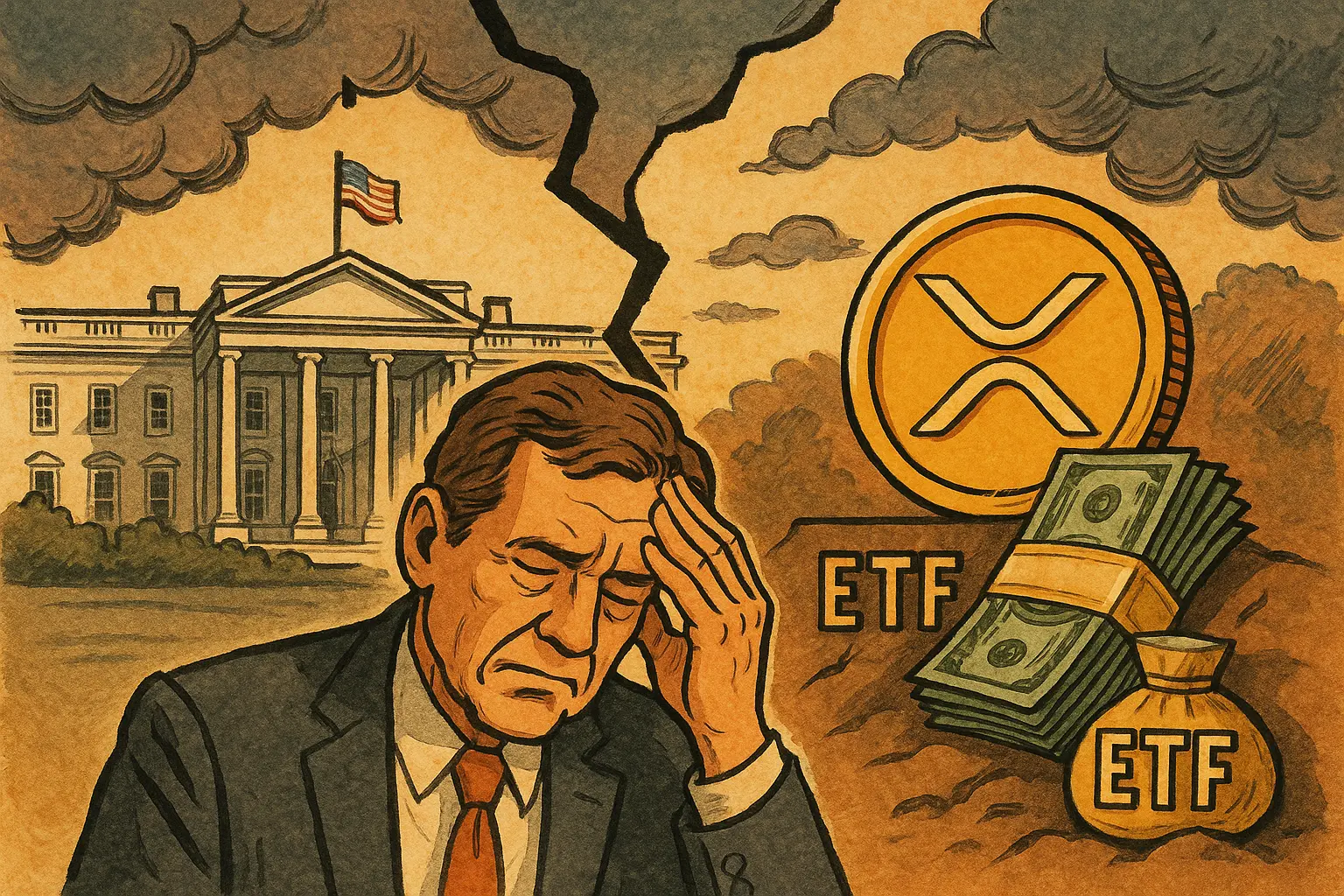
XRP ends two consecutive days of gains, as the White House crypto legislation meeting on February 10 failed to resolve the deadlock between TradFi and DeFi regarding stablecoin yields. U.S. banks oppose legislation that allows stablecoin rewards, with Bank of America CEO warning of a $6 trillion deposit outflow. The stalled progress of the Market Structure Bill puts pressure on XRP, with bulls holding the critical $1.40 support level. Despite policy setbacks, XRP spot ETF with zero outflows supports market sentiment.
White House Second Round Negotiation Breaks Down: $6 Trillion Deposit Battle
On February 10, representatives from the banking sector and the crypto industry met for the second time at the White House, seeking consensus on stablecoin yield legislation. However, this highly anticipated negotiation ultimately failed to break the deadlock between traditional finance (TradFi) and decentralized finance (DeFi), becoming the core focus of XRP news today. Due to the lack of agreement, XRP faces selling pressure, with bulls maintaining the $1.40 level.
On one side, U.S. banks are resisting legislation that permits stablecoin rewards. Banks argue that stablecoin yields far exceed deposit interest rates, which could lead to a mass migration of bank depositors to DeFi. Bank of America CEO Brian Moynihan recently warned that over $6 trillion in deposits could shift from the U.S. banking system into stablecoins. This figure is staggering, representing about 30% of total U.S. bank deposits.
A significant decline in deposits means banks will have to seek wholesale financing for loans. Wholesale funding costs are higher than deposit interest, which will narrow net interest margins and impact profits. For banks already struggling in a low-interest-rate environment, this structural shift could be devastating. Therefore, the banking sector is lobbying and exerting political pressure to prevent or limit the yield functions of stablecoins.
On the other hand, crypto firms like Coinbase are pushing for legislation that allows stablecoin rewards, which is a lucrative revenue stream for exchanges. As background, Coinbase withdrew support for the Senate Banking Committee’s Market Structure Bill draft in January this year. CEO Brian Armstrong warned that the draft would kill the reward mechanism for stablecoins and enable banks to prohibit their competitors. The banking committee responded by delaying a vote on the bill, triggering a wave of XRP sell-offs.
The latest developments from Tuesday’s meeting indicate that the deadlock between TradFi and DeFi persists, posing challenges to U.S. government efforts to reach an agreement before the end of February. Dan Spuller, EVP of the Blockchain Association, stated during Tuesday’s meeting: “Today’s follow-up shifted from broad discussions to serious problem-solving. Stablecoin rewards are at the core of the discussion. Banks did not negotiate the bill text but proposed broad restrictive principles, which remain a key point of disagreement.”
Three Core Disputes in the TradFi vs. DeFi Deadlock
Stablecoin Yield Authority: Banks demand bans or strict restrictions; DeFi advocates for full openness
Deposit Loss Compensation: Banks seek government subsidies or tax incentives; DeFi opposes unfair competition
Regulatory Jurisdiction: Banks want stablecoins under banking regulation; DeFi advocates for an independent regulatory framework
This deadlock impacts XRP news in two ways. In the short term, policy uncertainty suppresses price performance. But in the medium term, markets expect the U.S. Senate to eventually pass some form of compromise, supporting XRP’s medium- to long-term bullish outlook.
Ripple Chief Legal Officer Optimistic vs. Market Pessimism
Ripple’s Chief Legal Officer Stuart Alderoty offered a more optimistic summary of the meeting, stating: “Today’s White House meeting was productive — a spirit of compromise has emerged. Both parties still maintain a clear consensus on reasonable crypto market structure legislation. We should seize this moment, act immediately, and bring real wins for consumers and the U.S.”
This optimistic tone contrasts with the market’s actual reaction. XRP fell 2.58% on February 10, erasing the previous day’s 0.42% gain, closing at $1.3998. The token faces selling pressure greater than the overall crypto market, which declined 1.93%. This relative weakness indicates that the market does not buy into Alderoty’s optimistic statements.
However, a deeper analysis shows that Ripple, as a direct stakeholder, often has executives’ public statements leaning toward optimism. Alderoty’s emphasis on “spirit of compromise” and “bipartisan consensus” may be aimed at stabilizing investor confidence and avoiding panic selling. The actual negotiations and disagreements are likely more severe than public statements suggest.
The ongoing delay of the Market Structure Bill remains a negative factor in XRP news. Originally scheduled for voting in January, then postponed to February, the likelihood of passing before the end of February appears to be decreasing. Each delay weakens market confidence, implying that disagreements are harder to reconcile than expected. For XRP, passing the bill would provide regulatory clarity and attract more institutional investors. Delays mean this catalyst remains unrealized.
Despite setbacks in policy progress, market optimism about the bill’s passage and XRP’s utility continues to drive interest in XRP spot ETFs, reinforcing medium- to long-term bullish expectations. This fundamental and technical contradiction is at the core of XRP news today.
XRP Spot ETF: A Stable Anchor Amid Policy Uncertainty
Although the Market Structure Bill has not advanced, strong demand for XRP spot ETFs cushions downside risks. The XRP spot ETF currently holds over $1.04 billion in net assets, traded for 56 days, with only 4 days of outflows. This 93% inflow ratio is extremely rare in ETF history, indicating strong long-term investor confidence in XRP.
On February 10, despite XRP’s 2.58% decline, the ETF did not experience significant outflows. This “price drops but ETF remains stable” phenomenon suggests ETF investors are adopting a long-term allocation strategy rather than short-term trading. These investors may include pension funds, family offices, or wealth management clients, making decisions based on strategic positioning rather than market timing.
The strong demand for XRP ETFs provides structural support for the price. Even if policy progress stalls short-term and market sentiment remains bearish, continuous ETF buying can absorb some selling pressure and prevent a collapse. This explains why XRP can hold the critical $1.40 support level amid ongoing declines in February. The recent dip below the 50-day and 200-day moving averages indicates a strong bearish momentum. However, multiple positive fundamentals continue to offset technical bearish signals, supporting a medium-term bullish outlook.
Institutionally, XRP ETF investors clearly see Ripple’s long-term prospects in cross-border payments. Regardless of when the legislation passes, Ripple’s ongoing partnerships with financial institutions and the increasing volume of cross-border transactions on RippleNet provide real demand support. ETF investors are betting on this long-term utility rather than short-term policy catalysts.
Three-Stage Price Path: Short-term $1, Medium-term $2.5
(Source: Trading View)
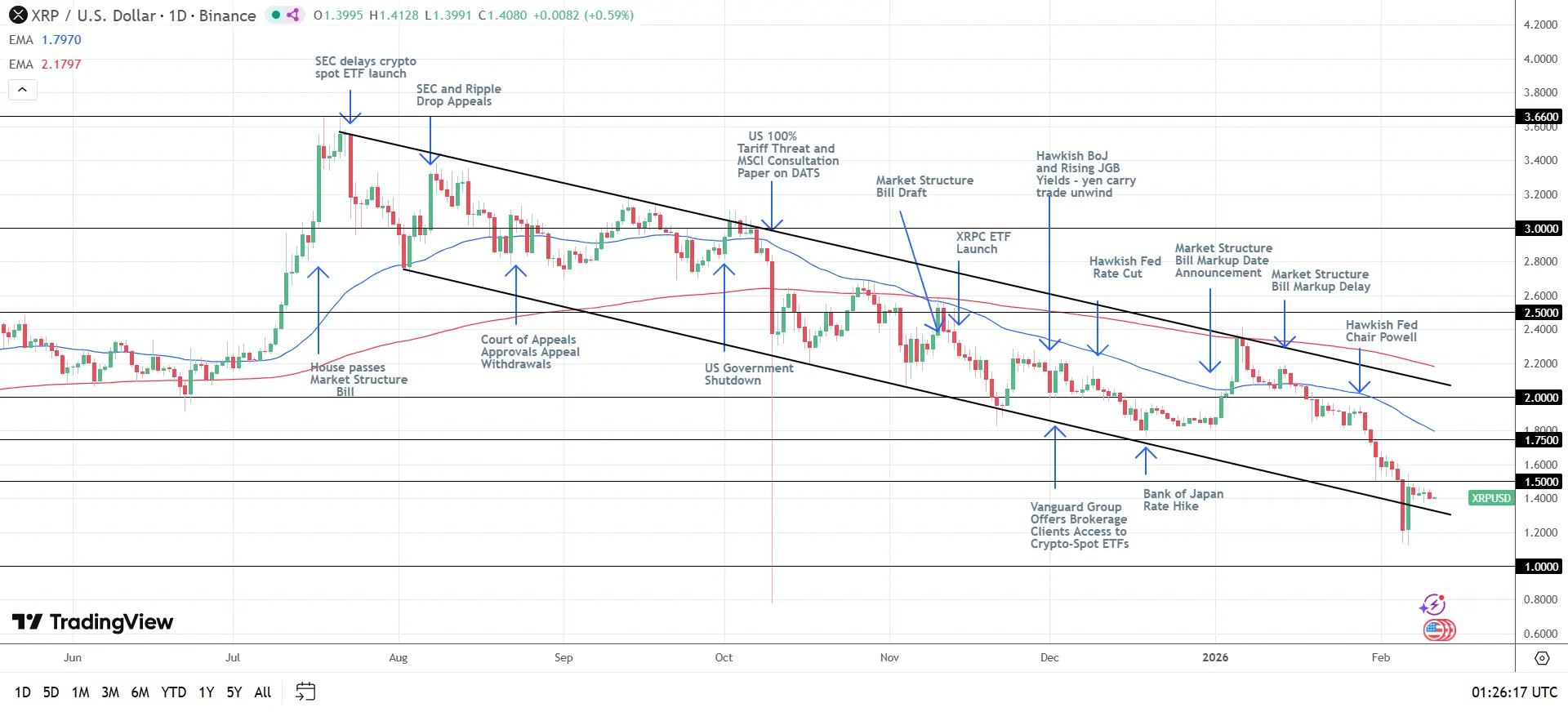
XRP The ongoing decline in February supports a short-term bearish outlook, but the medium-term remains bullish. Breaking below the downtrend line would make the $1.1227 low from February 6 the next support. If that breaks, $1.00 becomes the next key support. Falling below $1.00 would reaffirm the short-term bearish outlook and further validate the bearish structure.
Conversely, if the price breaks above $1.50, bulls will target $2.0 and the upward trendline. Continued breakout above the trendline would invalidate the bearish structure, signaling a trend reversal and reaffirming medium-term bullishness. On the daily chart, breaking above $1.50 would pave the way toward testing the 50-day moving average. Sustained breakout above the 50-day MA could indicate a short-term trend reversal to the upside. After a trend reversal, the 200-day moving average will come into play.
Key technical levels to watch include: support at $1.00 and then $0.7773; resistance at the 50-day MA at $1.7970; resistance at the 200-day MA at $2.1797; and resistance levels at $1.50, $2.0, $2.5, and $3.0. Short-term (1–4 weeks) target is $1.00, medium-term (4–8 weeks) target is $2.5, and long-term (8–12 weeks) target is $3.0.
The medium-term bullish outlook depends on the final passage of U.S. crypto legislation and the increasing utility of XRP. A dovish stance by the Federal Reserve and Japan’s central bank lowering neutral rates (possibly between 1% and 1.25%) will boost market sentiment. Additionally, strong inflows into U.S. XRP spot ETFs and progress on the Market Structure Bill will reinforce the positive medium-term outlook.
In 12 weeks, these scenarios could push XRP to a new all-time high of $3.66. Breaking above $3.66 would confirm a target of $5 within 6 to 12 months. Major downside risks to the medium-term bullish outlook include Japan’s central bank adopting a hawkish stance, weakening U.S. economic indicators increasing recession risks, delays or partisan opposition to the Market Structure Bill, and long-term net outflows from XRP spot ETF funds. These factors could pressure XRP down toward $1.00.
Related Articles
This New XRP ETF Pays Monthly Income — But It Doesn’t Actually Hold XRP
UK asset management firm Aviva Investors partners with Ripple to launch tokenized funds on the XRP Ledger