


2026 Horse Year Viral Toy: Sewing Mistake Turns Crying Horse Into National Icon
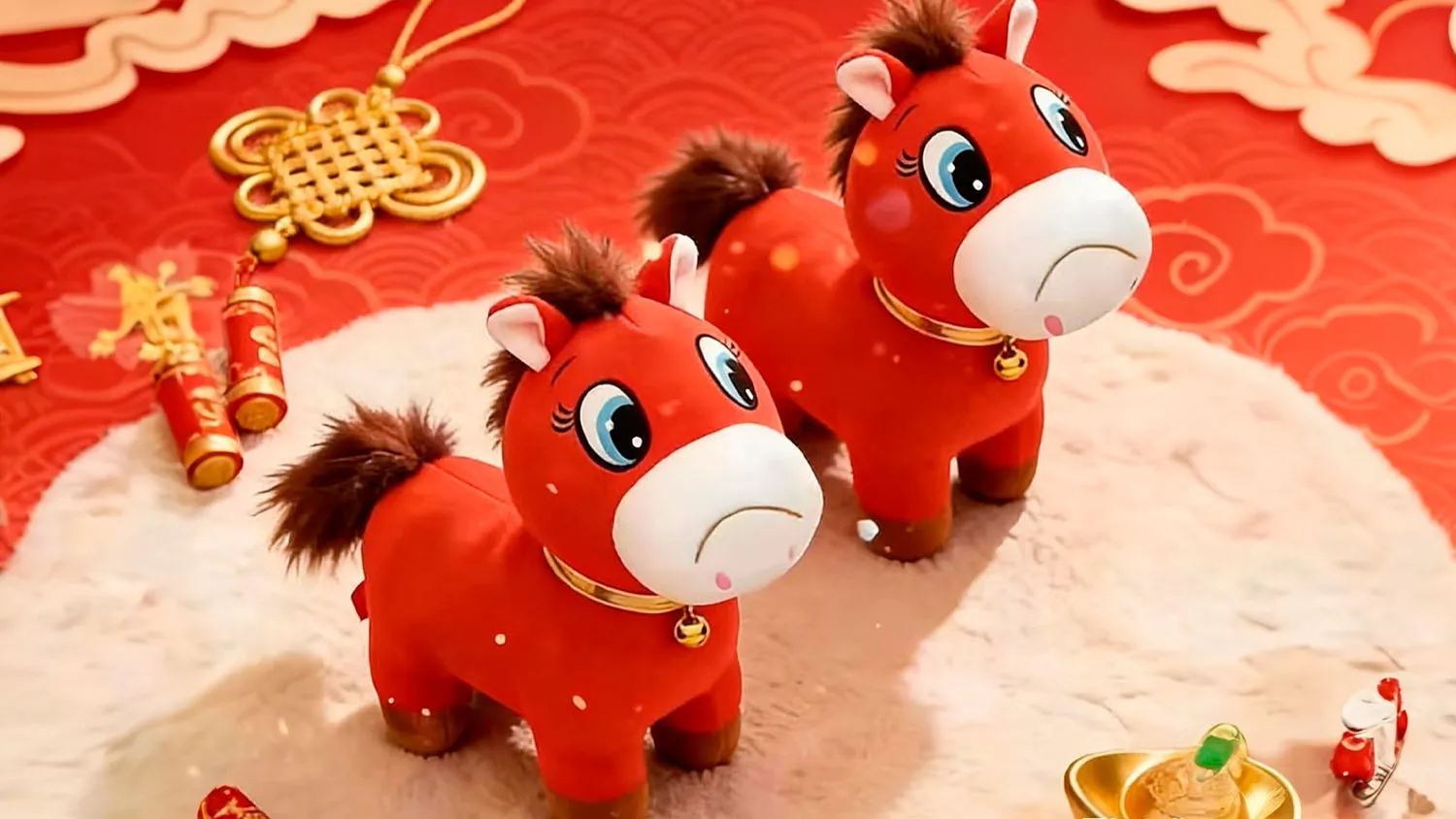
The 2026 Horse Year brings viral sensation: a $3.60 crying horse plushie with upside-down frown symbolizing Chinese corporate burnout. Made by Happy Sisters in Yiwu, the toy resulted from manufacturing error when a worker accidentally sewed the smile upside-down. The shop capitalized on social media popularity, mass-producing the morose toy resonating with exhausted 996 workers as “national-level emo doll.”
How Manufacturing Error Created 2026 Horse Year’s Hottest Toy
A horse toy in China meant to be Lunar New Year decoration has turned into symbol of corporate agony on Chinese social media. The red horse toy in question, made by shop Happy Sisters in China’s western Yiwu city, features upside-down snout, giving it morose look at odds with its festive golden bell. Per Chinese zodiac, the incoming year will be the 2026 Horse Year.
The seller told local media that shop worker had accidentally sewn the horse’s smile upside down, turning it into frown. But after the toy went viral on social media, the shop decided to produce more of the defective toy. This manufacturing error became happy mistake for the toy seller, transforming what could have been production waste into cultural phenomenon.
Happy Sisters’ decision to mass-produce the defect rather than correct it demonstrates shrewd understanding of consumer psychology. In market saturated with perfectly manufactured toys, the crying horse’s imperfection made it authentic and relatable. The handmade sewing mistake resonated with audiences because it didn’t feel like “cold assembly-line product,” according to Jason Yu, managing director of Beijing-based CTR Market Research.
“The emotional value the toy conveys is higher than any perfect toy can provide,” Yu explained. This authenticity in an age of mass production created connection with consumers seeking genuine emotional outlets rather than polished corporate products.
Symbol of Corporate Burnout in China’s 996 Culture
For many Chinese workers, the crying horse came to represent permission to be vulnerable—rare in the country’s high-pressure work culture. China is infamous for its grueling 9-9-6 work culture, meaning 9 a.m. to 9 p.m., six days a week. The 2026 Horse Year’s viral toy captures this exhaustion perfectly.
A user, He Qingshan, wrote on RedNote earlier this month that the doll is “healing in a high-pressure society.” Priced at about 25 Chinese yuan, or $3.60, its affordability helped it spread quickly online, turning it into “national-level emo doll” and form of “collective emotional projection.”
Another person on RedNote, Liang Chenxing, said in January post that the horse’s “drooping mouth” had “struck chord with contemporary workers.” The post received more than 1,000 likes. “Who hasn’t had moments when they want to cry but still have to hold it together?” the user wrote.
On the platform, creators began placing the horse beside office computers, posting photos with captions like: “Me when my proposal gets rejected.” One RedNote user described keeping it on their desk as having “little companion that understands all your fatigue and your dreams.” “It’s okay to cry on the face, but life must always be moving forward!” they wrote.
How the Crying Horse Resonates With Chinese Workers
Permission to Express Vulnerability: Rare in high-pressure Chinese corporate culture where showing weakness is stigmatized
Affordable Emotional Outlet: At $3.60, accessible to all workers regardless of income level
Desktop Companion: Physical reminder that struggling is normal and shared experience
Ironic Optimism: Crying face paired with festive bell captures contradictory pressure to appear happy while suffering
The crying horse’s viral success reflects deeper dissatisfaction with China’s work culture that movements like “lying flat” and “let it rot” have previously expressed. These movements rejected hustle culture’s demands, advocating for minimal effort and refusing overtime. The 2026 Horse Year crying horse provides physical symbol for these sentiments, making abstract frustration tangible.
Expert Analysis: Smart Marketing or Genuine Phenomenon?
Mark Tanner, managing director of Chinese consumer research firm China Skinny, said he wasn’t sure he believed the manufacturing error story, but acknowledged it was smart business move nonetheless. “This has been happening for some years, particularly with movements like lying flat, but it captures general psyche where many Chinese consumers are feeling less optimistic at moment,” Tanner explained.
His skepticism raises interesting question: Was the crying horse truly accidental, or calculated marketing exploiting current cultural mood? Regardless of origin, the outcome demonstrates sophisticated understanding of consumer psychology. The “happy mistake” narrative itself became part of the toy’s appeal, suggesting authenticity in cynical market landscape.
Jacob Cooke, CEO of Beijing-based e-commerce consulting firm WPIC Marketing + Technologies, said that “younger consumers are increasingly comfortable acknowledging stress in light, ironic ways.” “Consumer products and internet memes can act as outlets for discussing work pressure, especially on platforms like Xiaohongshu (RedNote), where consumer culture and emotional expression are tightly intertwined,” Cooke explained.
He compared the crying horse toy to Chinese toymaker Pop Mart’s “ugly-cute” IPs like Labubu and Crybaby. These characters similarly embrace imperfection and emotional vulnerability, achieving massive commercial success by resonating with generation seeking authentic emotional expression rather than aspirational perfection. Pop Mart’s success with “ugly-cute” aesthetic validated market for toys embodying negative emotions, paving way for crying horse’s viral moment.
Cultural Context: Why 2026 Horse Year Needs Crying Symbol
The timing of the crying horse’s emergence carries significance beyond mere coincidence. The 2026 Horse Year arrives amid economic headwinds for China—slowing GDP growth, property market struggles, youth unemployment exceeding 20%, and widespread corporate layoffs. Traditional Lunar New Year decorations emphasize prosperity, luck, and optimism through bright colors and smiling figures. The crying horse subverts these expectations.
In traditional Chinese culture, horses symbolize success, speed, and upward mobility—attributes highly valued in achievement-oriented society. The horse is seventh animal in Chinese zodiac, associated with enthusiasm, energy, and independence. Those born in horse years are believed to be hardworking, ambitious, and success-driven.
The crying horse’s inversion of these traditional associations makes it powerful cultural commentary. By taking symbol of success and giving it tears, the toy acknowledges the gap between cultural expectations and lived reality. Workers are supposed to embody horse-like energy and ambition, yet many feel exhausted, burnt out, and defeated by unsustainable work demands.
This subversive quality explains why the crying horse resonates more deeply than generic stress-relief toys. It’s not just cute object—it’s cultural critique packaged as 2026 Horse Year decoration, allowing expression of dissatisfaction within socially acceptable framework of holiday gift-giving and desk decoration.
The Economics of Emotional Resonance
The crying horse’s $3.60 price point proved crucial to its viral spread. Priced low enough for impulse purchases, the toy required no significant financial commitment. This accessibility democratized participation in the cultural phenomenon—any worker could afford placing one on their desk without budget concerns.
The affordability contrasts sharply with Pop Mart’s collectibles, which often retail for $10-$20 per figure with blind box mechanics encouraging multiple purchases. While Pop Mart targets collectors willing to spend hundreds building complete sets, the crying horse targets mass market seeking simple emotional validation at minimal cost.
From business perspective, Happy Sisters’ decision to embrace the manufacturing defect rather than correct it demonstrates agile response to market signals. Traditional manufacturing mindset would have discarded defective inventory and refined production processes to prevent future errors. Instead, Happy Sisters recognized the defect’s value, pivoted immediately, and captured viral moment before trend faded.
This responsiveness—turning potential loss into profit within days—exemplifies advantage small businesses have over large corporations in fast-moving consumer trends. By the time large toy manufacturers recognize trend and adjust production, the cultural moment often passes. Happy Sisters’ proximity to manufacturing in Yiwu, China’s wholesale capital, enabled rapid scaling from defective batches to intentional mass production.
Xiaohongshu (RedNote) Amplifies Crying Horse Phenomenon
The crying horse’s viral trajectory demonstrates Xiaohongshu’s power as cultural trendsetter in China. The platform, known internationally as RedNote, combines Instagram’s visual focus with Pinterest’s discovery algorithms and Reddit’s community discussions. This unique combination makes it ideal for product discovery and cultural movement formation.
Users posting photos of crying horses beside office computers created template that others replicated, forming feedback loop accelerating spread. Each post served as both personal expression and implicit endorsement, encouraging others to participate. The platform’s algorithm amplified emotionally resonant content, ensuring crying horse posts reached users most likely to identify with the sentiment.
Xiaohongshu’s user base skews young, urban, and female—demographics experiencing particularly acute work-life balance pressures in contemporary China. For these users, the crying horse provided socially acceptable way to express feelings that direct complaints about employers or working conditions might not. Posting photo of toy allowed vulnerability without career risk.
The platform’s tight intertwining of consumer culture and emotional expression, as Cooke noted, created perfect environment for the 2026 Horse Year crying horse phenomenon. Users weren’t just buying toy—they were participating in cultural moment, signaling alignment with shared emotional experience, and finding community among fellow sufferers of corporate burnout.
What the Crying Horse Reveals About Chinese Consumer Sentiment
The crying horse’s popularity reveals broader shifts in Chinese consumer psychology entering the 2026 Horse Year. Traditional Lunar New Year decorations emphasized aspirational themes—prosperity, success, advancement. The crying horse’s embrace of sadness and struggle represents generational shift toward valuing emotional authenticity over performative optimism.
This shift has implications beyond novelty toys. Brands increasingly recognize that younger Chinese consumers respond to products acknowledging their struggles rather than ignoring them. The lying flat and let it rot movements demonstrated widespread rejection of hustle culture’s impossible demands. The crying horse commercializes this sentiment, allowing consumers to express dissatisfaction through market participation rather than social activism.
For the 2026 Horse Year specifically, this creates interesting tension. The year symbolically represents energy, ambition, and forward movement—qualities that exhausted workers feel increasingly unable to embody. The crying horse acknowledges this gap, providing comfort through shared recognition that meeting traditional expectations may be unrealistic or undesirable.
From economic perspective, the phenomenon suggests Chinese consumers entering the 2026 Horse Year with lowered expectations and heightened cynicism. This sentiment could influence spending patterns, career choices, and social movements throughout the year. Brands hoping to connect with young Chinese consumers may need to embrace similar emotional honesty rather than relying on traditional aspirational messaging.
Implications for Brands and Marketers
The crying horse’s success offers lessons for brands targeting Chinese consumers in the 2026 Horse Year. Mark Tanner noted this trend has been happening for years, particularly with movements like lying flat, capturing general psyche where many Chinese consumers feel less optimistic currently.
Jacob Cooke’s observation that “younger consumers are increasingly comfortable acknowledging stress in light, ironic ways” suggests brands should embrace emotional authenticity rather than avoiding negative emotions. Products and marketing that acknowledge struggles while maintaining light touch—like the crying horse’s frown paired with festive bell—may resonate more strongly than purely optimistic messaging.
The comparison to Pop Mart’s success with “ugly-cute” IPs like Labubu and Crybaby validates this approach. Pop Mart became billion-dollar company by embracing characters with exaggerated flaws and emotional vulnerability. The crying horse follows this playbook but at accessible price point, potentially reaching broader market than premium collectibles.
For the 2026 Horse Year, expect more products embracing similar emotional authenticity. Traditional Lunar New Year offerings emphasized prosperity and success; new generation of products may increasingly acknowledge struggles while maintaining festive framework. This represents fundamental shift in how Chinese consumers engage with holiday traditions and consumer culture.
FAQ
Why is the crying horse toy popular in China’s 2026 Horse Year?
The crying horse resonates with Chinese workers exhausted by 996 culture (9 a.m. to 9 p.m., six days a week). Its upside-down frown gives “permission to be vulnerable” in high-pressure society, becoming symbol for corporate burnout during the 2026 Horse Year.
Was the crying horse design intentional or accidental?
Happy Sisters shop claims a worker accidentally sewed the smile upside-down, creating the frown. However, marketing expert Mark Tanner expressed skepticism, suggesting it may have been intentional. Regardless, the shop capitalized by mass-producing the “defect.”
How much does the crying horse toy cost?
The crying horse sells for approximately 25 Chinese yuan or $3.60. This affordable price point helped it spread quickly, making it accessible for impulse purchases and contributing to its viral success.
What does the horse symbolize in Chinese zodiac?
Horses traditionally symbolize success, speed, ambition, and upward mobility in Chinese culture. Those born in horse years are believed to be hardworking and success-driven, making the crying horse’s inversion of these traits particularly poignant.
How is the crying horse similar to Pop Mart’s toys?
Marketing experts compared the crying horse to Pop Mart’s “ugly-cute” IPs like Labubu and Crybaby, which embrace imperfection and emotional vulnerability. Both tap into younger consumers’ desire for authentic emotional expression rather than aspirational perfection.
Why does the crying horse matter for the 2026 Horse Year?
The crying horse subverts traditional Lunar New Year optimism, acknowledging the gap between cultural expectations (horse-like energy and ambition) and lived reality (exhaustion and burnout). It represents shift toward emotional authenticity in Chinese consumer culture.