

Trade
Basic
Futures
Futures
Hundreds of contracts settled in USDT or BTC
TradFi
Gold
Trade global traditional assets with USDT in one place
Options
Hot
Trade European-style vanilla options
Unified Account
Maximize your capital efficiency
Demo Trading
Futures Kickoff
Get prepared for your futures trading
Futures Events
Participate in events to win generous rewards
Demo Trading
Use virtual funds to experience risk-free trading
Earn
Launch
CandyDrop
Collect candies to earn airdrops
Launchpool
Quick staking, earn potential new tokens
HODLer Airdrop
Hold GT and get massive airdrops for free
Launchpad
Be early to the next big token project
Alpha Points
Trade on-chain assets and enjoy airdrop rewards!
Futures Points
Earn futures points and claim airdrop rewards
Investment
Simple Earn
Earn interests with idle tokens
Auto-Invest
Auto-invest on a regular basis
Dual Investment
Buy low and sell high to take profits from price fluctuations
Soft Staking
Earn rewards with flexible staking
Crypto Loan
0 Fees
Pledge one crypto to borrow another
Lending Center
One-stop lending hub
VIP Wealth Hub
Customized wealth management empowers your assets growth
Private Wealth Management
Customized asset management to grow your digital assets
Quant Fund
Top asset management team helps you profit without hassle
Staking
Stake cryptos to earn in PoS products
Smart Leverage
New
No forced liquidation before maturity, worry-free leveraged gains
GUSD Minting
Use USDT/USDC to mint GUSD for treasury-level yields

More




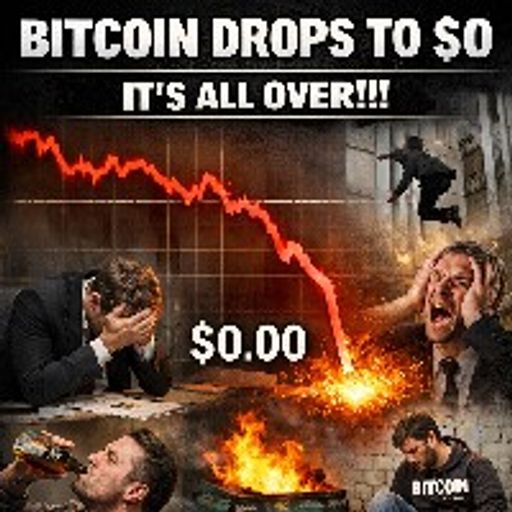

The economy: a living system that drives the world
Economics forms the foundation of everything we experience in our daily lives. From the price of a cup of coffee to the investment decisions of large corporations, everything is interconnected in a web of constant interactions that determine how we live, work, spend, and plan for the future. Although few people think deeply about its mechanisms, understanding how economics works is essential for making informed decisions.
The Pillars of Economics: Production, Distribution, and Consumption
At its core, economics revolves around three fundamental activities. Production creates goods and services, distribution transports and markets them, and final consumption occurs when the user acquires what they need. These three elements are interdependent.
Imagine a value chain: a company extracts raw materials, sells them to a manufacturer who transforms them, then a distributor takes them to the market, and finally the consumer makes the purchase. Each link contributes to the functioning of the economy. If one fails, the entire network suffers.
We all participate in this system. People who spend money, those who manufacture products, those who transport them, and governments regulating these activities are all integral parts of the economy. There are no secondary actors here; each plays a decisive role in the perpetual movement of goods, services, and capital.
Economic Sectors: Division of Labor
Modern economic structure is divided into three main sectors, each with specific functions. The primary sector involves extracting natural resources: mining, agriculture, forestry. These activities produce raw materials that feed the rest of the system.
The secondary sector receives these raw materials and transforms them. Here occurs manufacturing, industrial processing, and the creation of complex products. Some of these products go directly to consumers, while others serve as components for manufacturing new items.
Finally, the tertiary sector encompasses all kinds of services: distribution, advertising, finance, education, health. Some contemporary analysts subdivide this sector into quaternary (information and technology) and quinary (specialized services), but the three-part classification remains the most widely accepted framework globally.
The Economic Cycle: Between Expansion and Contraction
Economies are not static; they move in predictable cycles of expansion and contraction. Understanding these phases is crucial for analysts, policymakers, and entrepreneurs.
Expansion Phase
When the economy emerges from a crisis, a growth phase begins. Demand for goods increases, stock prices rise, unemployment falls, and production intensifies. This initial phase generates widespread optimism. People are willing to spend, companies invest in new projects, and credit flows more easily. Supply and demand mutually drive growth.
Boom Phase
Gradually, the economy reaches its peak. Production capacities are fully utilized. Prices of goods and services stabilize, sales slow down, and small companies disappear through mergers or acquisitions. An ironic thing happens here: although market participants remain optimistic, expectations start to darken.
Recession Phase
Negative expectations materialize. Costs rise sharply, demand falls, and profit margins compress. Stock prices begin to decline, unemployment rises, precarious jobs proliferate, and incomes decrease. Spending contracts sharply, and investment nearly halts.
Depression Phase
At the cycle’s extreme, depression occurs. Total pessimism prevails, even when signs of recovery appear. Companies go bankrupt en masse, capital evaporates, interest rates rise, unemployment reaches catastrophic levels, and investment hits historic lows. The value of money erodes significantly.
Types of Economic Cycles
Cycles vary in duration and scope. They are classified into three main categories.
Seasonal cycles are the shortest, lasting only months. They generate predictable fluctuations in demand based on the time of year, affecting specific sectors like retail, tourism, or agriculture.
Economic fluctuations extend over years and result from prolonged imbalances between supply and demand. Their impact is significant, and recovery takes years. They are characterized by unpredictability and the capacity to trigger severe crises.
Structural fluctuations are the longest-lasting, spanning decades. They emerge from deep technological and social innovations. They represent generational cycles that cause radical transformations, leading to both massive unemployment and unprecedented growth opportunities.
Forces Shaping the Economy
Countless factors influence the economy, but some are particularly decisive.
Government Policies
Governments have powerful tools to steer the economy. Fiscal policy controls taxes and public spending. Monetary policy, managed by central banks, regulates the amount of money and credit in circulation. Through these tools, they can stimulate depressed economies or deflate overheated ones.
Interest Rates
The cost of borrowing money directly influences consumer and business behavior. Low rates encourage borrowing for purchases, ventures, and investments, accelerating growth. High rates slow activity, reducing credit demand.
International Trade
The exchange of goods and services between countries expands growth opportunities. When two nations have complementary resources, both benefit from trade. However, certain domestic sectors may suffer external competition, leading to local job losses.
Complementary Perspectives: Micro and Macro
Economics is understood from two different angles. Microeconomics examines specific phenomena: consumer behavior, business performance, dynamics of particular markets. It studies how supply and demand determine prices and how variables like GDP and unemployment rates relate.
Macroeconomics looks at the big picture. It analyzes entire national economies, trade balances, exchange rates, overall inflation, and unemployment at the national level. Its approach is systemic, observing how all pieces interact to shape global economic health.
Both perspectives are essential. Without microeconomics, we wouldn’t understand how individual agents make decisions. Without macroeconomics, we wouldn’t see how these aggregated decisions create systemic dynamics that transform the entire economy.
Conclusion: Unraveling Economic Complexity
Economics is much more than numbers and charts. It is a living, dynamic system that constantly evolves. It determines the prosperity or suffering of entire societies and ultimately the globalized world.
Understanding how it works provides tools to anticipate trends, make informed decisions, and comprehend why certain events happen in society. Although there are always more nuances to explore, this fundamental understanding of economics opens doors to a deeper knowledge of the world around us.