

Trade
Basic
Futures
Futures
Hundreds of contracts settled in USDT or BTC
TradFi
Gold
Trade global traditional assets with USDT in one place
Options
Hot
Trade European-style vanilla options
Unified Account
Maximize your capital efficiency
Demo Trading
Futures Kickoff
Get prepared for your futures trading
Futures Events
Participate in events to win generous rewards
Demo Trading
Use virtual funds to experience risk-free trading
Earn
Launch
CandyDrop
Collect candies to earn airdrops
Launchpool
Quick staking, earn potential new tokens
HODLer Airdrop
Hold GT and get massive airdrops for free
Launchpad
Be early to the next big token project
Alpha Points
Trade on-chain assets and enjoy airdrop rewards!
Futures Points
Earn futures points and claim airdrop rewards
Investment
Simple Earn
Earn interests with idle tokens
Auto-Invest
Auto-invest on a regular basis
Dual Investment
Buy low and sell high to take profits from price fluctuations
Soft Staking
Earn rewards with flexible staking
Crypto Loan
0 Fees
Pledge one crypto to borrow another
Lending Center
One-stop lending hub
VIP Wealth Hub
Customized wealth management empowers your assets growth
Private Wealth Management
Customized asset management to grow your digital assets
Quant Fund
Top asset management team helps you profit without hassle
Staking
Stake cryptos to earn in PoS products
Smart Leverage
New
No forced liquidation before maturity, worry-free leveraged gains
GUSD Minting
Use USDT/USDC to mint GUSD for treasury-level yields

More




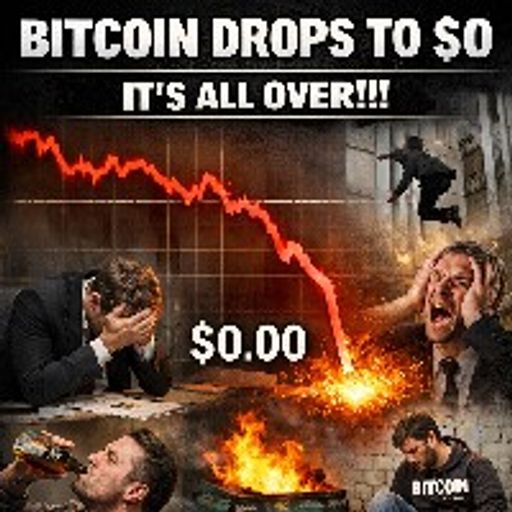

The economy as the engine of the world: How it really works
Economics is not simply a set of figures and abstract theories. It is, at its core, the system that determines how we live, work, and relate to our environment. Every purchase decision, every business investment, and every government policy are threads that constantly weave the fabric of our economic existence.
When we observe the world from an economic perspective, we discover that all actions are interconnected in a complex network where nothing happens in isolation. The prices of food we buy at the market, the unemployment rates we hear in the news, and the prosperity or decline of large corporations are all manifestations of deeper economic forces surrounding our planet.
The heartbeat of the economy: Supply, demand, and the endless cycle
At the heart of every economy beats a fundamental principle: the interaction between what people want to consume and what businesses can produce. When demand for a product grows, prices tend to rise, encouraging producers to generate more. When supply exceeds what people want to buy, prices fall. This perpetual dance between consumers and producers keeps the economy alive.
To better understand how this mechanism works, imagine a furniture company. This company needs wood from a forestry supplier. The supplier sells the wood to the factory, which transforms the material into finished products. Then, these furniture pieces go to a distribution company that places them in stores, where they finally reach the consumer. At each stage of this chain, jobs are created, profits are generated, and value is added. If demand drops at any point in this chain, the entire system suffers. That’s how the economy functions as an interconnected living organism.
Who keeps the economy turning: The three pillars of production
We all participate in the economy, from the individual who buys a coffee in the morning to governments designing macroeconomic policies. But to better understand who plays what role, economists have divided the economy into three fundamental sectors working together.
The primary sector: Where it all begins
The primary sector is the foundation of all modern economies. Here, natural resources are extracted: precious minerals from mines, food from the land, wood from forests. Without this sector, we wouldn’t have the raw materials necessary for everything else to function.
The secondary sector: Transformation
Once the primary sector provides raw materials, the secondary sector takes over to transform them. Factories process, manufacture, and produce goods that can be sold directly to consumers or used as components for more complex products. This sector is crucial because it adds value to raw natural resources.
The tertiary sector: Distribution and services
Finally, the tertiary sector completes the economic cycle through essential services like distribution, advertising, and commerce. Without this sector, products would never reach those who need them. Some modern economists speak of additional sectors (quaternary and quinary) to distinguish specialized services like consulting and research, but the three-sector model remains the most widely accepted framework.
The four seasons of the economy: Cycles that shape our future
Just as the seasons have a predictable pattern, the economy also goes through well-defined cycles. Understanding these cycles is essential for decision-makers, but also benefits anyone looking to anticipate changes in their own financial life.
The economy follows a repetitive cyclical pattern identified by economists in four distinct phases:
Economic expansion: The dawn of new hopes
After a crisis, comes rebirth. Markets are young, dynamic, and optimistic. People spend more, companies invest in growth, and jobs proliferate. Stock prices rise, unemployment decreases, and trade flourishes. This is when almost everyone feels optimistic about the future and is willing to take risks.
The boom phase: Reaching the peak
In this stage, production operates at full capacity. Machines run nonstop, offices are bustling. However, this is also where the first warning appears. Price growth slows down, sales begin to stagnate. Smaller companies are absorbed by larger ones through mergers and acquisitions. Interestingly, even as reality starts to weaken, most market participants maintain superficial optimism, even if their internal expectations have turned negative.
Recession: The inevitable decline
When this phase arrives, the negative expectations accumulated during the boom finally materialize. Production costs suddenly increase, and demand for goods drops sharply. Business profits plummet, stock prices fall, and unemployment rises. Many people are forced to work reduced hours, their incomes decrease, and overall spending in the economy contracts significantly.
Depression: The dark night
This is the most severe phase of the economic cycle. Markets live under a cloud of constant pessimism, even when signs of recovery are on the horizon. Companies struggle to survive, their assets shrink drastically, capital costs soar, and many declare insolvency. The currency itself loses value, unemployment hits record highs, and there is virtually no new investment. It’s a time of survival, not growth.
Different rhythms: How the economy classifies its cycles
Not all economic cycles last the same amount of time. The economy experiences variations in duration and magnitude that specialists categorize into three types:
Seasonal cycles: The fastest pulse
Seasonal cycles are brief, lasting only a few months. Despite their short duration, they can significantly impact specific industries. For example, retail experiences very different demand patterns depending on the time of year. These cycles are relatively predictable, allowing companies to prepare.
Economic fluctuations: The irregular core
These cycles typically extend over years and result from imbalances between supply and demand that persist longer than expected. The problem is that these imbalances are not immediately recognized; by the time issues are detected, it’s often too late. Economic fluctuations are notoriously unpredictable and can trigger severe crises that take years to resolve.
Structural fluctuations: The generational change
The longest type of cycle spans decades. They are generally caused by profound technological or social transformations. These changes are so fundamental that no savings system can fully protect against them. When they occur, they often lead to widespread poverty and catastrophic unemployment. On the positive side, they tend to pave the way for revolutionary innovations that eventually generate new prosperity.
Forces shaping the modern economy
Although dozens of factors influence the economy at any given moment, some have a particularly deep impact:
Government policies: The visible hand
Governments have powerful tools to influence the direction of the economy. Through fiscal policy, they can adjust taxes and public spending to stimulate or slow growth. Via monetary policy, central banks control the amount of money available in the economy and the cost of borrowing. These tools can ignite growth or dampen an overheated economy.
Interest rates: The price of borrowing
In the modern world, debt is an integral part of how the economy functions. Individuals borrow money to start businesses, buy homes, or pay for education. Companies borrow to expand. When interest rates are low, borrowing is cheap, encouraging more debt and spending. This typically stimulates growth. Conversely, when interest rates rise, the cost of debt increases, discouraging borrowing and potentially cooling the economy.
International trade: Bridges between nations
The modern economy is inherently global. When two countries have different resources and complementary needs, they can benefit from exchanging goods and services. However, this trade can also have uneven consequences, such as job losses in industries that cannot compete with cheaper imports.
Twin perspectives: Micro and macro in the economy
To fully understand how the economy works, it’s necessary to view it from two simultaneous angles:
Microeconomics focuses on details: how prices are set for specific goods, how consumers make purchasing decisions, how individual companies operate and compete. Here, we observe specific markets and the behavior of individual actors.
Macroeconomics, on the other hand, looks at the big picture. It deals with how an entire national economy functions, how countries interact, how national income is distributed, what determines aggregate unemployment rates, and how inflation is controlled. Macroeconomics is essentially the study of the global economy.
The reality is that both perspectives are necessary. The decisions of an individual company affect the overall market, which in turn influences national and international policies. It’s a feedback system where nothing exists in isolation.
Unraveling the mysteries of the economy
Economics is more than an academic discipline or a set of rules we memorize in school. It is the mirror reflecting human condition in all its complexity. Every wave of prosperity and every valley of economic hardship represent our collective hopes, fears, and individual actions combined.
Understanding how the economy works empowers us. It allows us to make smarter financial decisions, anticipate changes in our work environment, and better comprehend the world we live in. Although the depth of economics is virtually limitless—there are always new layers to explore and nuances to discover—knowing its fundamental principles is accessible to everyone.
Economics continues to evolve, driven by technology, social change, and human innovation. The key is to recognize that we are all active participants in this complex system, and our actions, no matter how small, contribute to how the economy functions today and in future generations.