

Trade
Basic
Futures
Futures
Hundreds of contracts settled in USDT or BTC
TradFi
Gold
Trade global traditional assets with USDT in one place
Options
Hot
Trade European-style vanilla options
Unified Account
Maximize your capital efficiency
Demo Trading
Futures Kickoff
Get prepared for your futures trading
Futures Events
Participate in events to win generous rewards
Demo Trading
Use virtual funds to experience risk-free trading
Earn
Launch
CandyDrop
Collect candies to earn airdrops
Launchpool
Quick staking, earn potential new tokens
HODLer Airdrop
Hold GT and get massive airdrops for free
Launchpad
Be early to the next big token project
Alpha Points
Trade on-chain assets and enjoy airdrop rewards!
Futures Points
Earn futures points and claim airdrop rewards
Investment
Simple Earn
Earn interests with idle tokens
Auto-Invest
Auto-invest on a regular basis
Dual Investment
Buy low and sell high to take profits from price fluctuations
Soft Staking
Earn rewards with flexible staking
Crypto Loan
0 Fees
Pledge one crypto to borrow another
Lending Center
One-stop lending hub
VIP Wealth Hub
Customized wealth management empowers your assets growth
Private Wealth Management
Customized asset management to grow your digital assets
Quant Fund
Top asset management team helps you profit without hassle
Staking
Stake cryptos to earn in PoS products
Smart Leverage
New
No forced liquidation before maturity, worry-free leveraged gains
GUSD Minting
Use USDT/USDC to mint GUSD for treasury-level yields

More




From memes to news: how Latin American youth get informed in the social media era
The way people get informed has undergone a profound transformation over the past decade. No longer are users actively seeking out news: instead, news simply appears, slipping between WhatsApp messages, memes, comments, and digital conversations. This silent but decisive shift in young people’s information habits is at the heart of the research “Transitions. Emerging Information Consumption in Communication Students in Latin America,” coordinated by Francisco Albarello and his team at Investigar en Red, a community bringing together over 100 researchers from 38 universities across 9 Latin American countries.
The study documents a crucial transition: from intentional information consumption—when people deliberately seek out news—to incidental consumption, where news arrives accidentally through digital socialization dynamics. This phenomenon has deep implications for the construction of the traditional public agenda. Topics that gain relevance no longer solely respond to editorial hierarchies of major media outlets but emerge from spontaneous interactions on social networks, where personal interest increasingly takes center stage while conscious searches for information on public affairs beyond individual preferences weaken.
From accidental consumption to the prominence of digital sociality
The phenomenon that researchers call “news find me perception”—the perception that “news finds me”—has become a widespread attitude among communication and journalism students interviewed. Young people report that they mainly get informed while chatting with their contacts: they learn about something a family member or friend comments on, and that information circulates within their circles. In this context, information is a direct result of the relationships they establish through digital platforms, not the product of deliberate efforts to stay informed.
This transformation decisively influences which topics capture their attention. They feel relatively informed about issues that arise in their conversations, while the traditional habit of consciously seeking out information about the “public sphere” beyond immediate interests is fading. The smartphone, with its logic of rapid movement and personalized content, reinforces this pattern. Users read in a fragmented way, driven by interest impulses, but when something truly captivates them, they deepen: they click on an interesting link, search on Google, or turn to YouTube. However, this access is fundamentally different from the way traditional media reading used to be.
Networks become media: the paradox of fragmented information
Social networks have ceased to function solely as distribution channels and have, in fact, become information media in their own right. Yet, this does not mean the death of professional journalism. Data reveal a more complex situation: there exists a stratified information ecosystem where young people consult different sources for different purposes.
When it comes to informing themselves about topics of interest, they mainly turn to social media. They follow media outlets and journalists, but show a particular preference for following reporters directly rather than corporate media accounts. In group interviews, many explained that they believe journalists can report with greater freedom outside the institutional restrictions of their employers. However, when they need to verify information, when something raises doubts, or when they want to deepen a topic, they return to established brands. Websites and apps of traditional media still serve as references for quality and credibility, as places to verify if something is truly accurate.
This paradox is significant: they get informed through digital platforms, but when they want to fact-check or expand on a topic, they go back to media outlets. This suggests that journalistic brands maintain a relevant role in the new ecosystem, even though access to them has entirely migrated to digital interfaces. Vivian Schiller, an expert in media transformation, has argued that there are no magic solutions to save the media: we must genuinely listen to the public. This research finding seems to confirm her diagnosis: young people value depth and accuracy in professional media, but access them in ways completely different from before.
Memes, videos, and the redefinition of cognitive depth
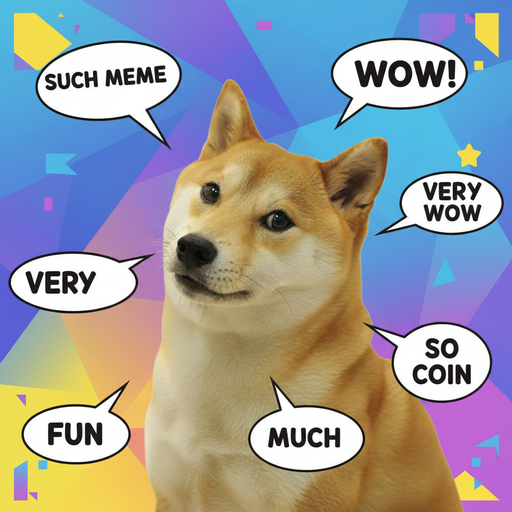
One of the most intriguing discoveries of the study concerns the role of memes in circulating news. Memes do not simply function as entertainment; they act as entry points into the information ecosystem. They do not make young people feel fully informed, but they prompt them to seek more information on social networks or news sites to avoid losing context. A well-crafted meme requires sophisticated communication skills: summarizing information in few words, selecting appropriate images or templates, and employing irony. These are valuable micro-genres that operate as natural subgenres within this ecosystem.
What’s interesting is that students value humor, irony, and wit when these emerge organically, especially in spaces like memes. However, when they detect that humor in news programs is forced or artificial, they see it as diminishing rigor. In contrast, streaming programs— which surged as spaces for news circulation during the pandemic—use humor differently: as a resource for closeness with the creator, inheriting the informal communication style of YouTube.
Regarding cognitive depth on screens, the research offers a nuanced perspective. It would be superficial to claim that all screen consumption is trivial. Compared to print reading, fragmentation and speed are certainly present. But there is another form of depth: dispersed, multi-source, and non-linear reading that, although rapid, is not necessarily superficial. Young people turn to long videos on YouTube when they want to understand something in depth; for them, audiovisual format has become the space for extended explanations. When something genuinely interests them, they are capable of consuming lengthy texts or extensive videos. What has changed is their sense of freedom to pause and switch activities if the content does not captivate them, unlike the implicit obligation that existed with traditional media.
Rejection of negativity and information overload
The study detects a marked rejection among young people toward negative news, especially related to politics and security. This phenomenon is not exclusive to Latin America: the 2024 Reuters report documents that approximately 39% of the global population actively avoids news. But the rejection goes beyond negative content itself. Students point out that what drives them away is the way media handle these topics: sensationalist strategies to attract attention, saturation of coverage on a single event, lack of context.
When a topic like the pandemic, a criminal incident, or a social conflict dominates the media agenda with dramatic emphasis, it generates a rejection effect. Young people describe this with words like “overload,” “annoyance,” and “fatigue.” They feel overwhelmed by information, which negatively impacts their emotional well-being. They prefer to “escape” into their favorite content: thematic agendas aligned with their interests or entertainment. The avoidance of negative news is thus less about a crisis of trust in journalism and more about the experience of emotional exhaustion caused by media treatment of these issues.
Algorithms, bubbles, and the educational challenge of broadening horizons
One of the most concerning findings is that young people feel “moderately informed.” This paradoxical feeling: they feel informed about topics they care about, but are aware that this partial information leaves them out of debates on relevant public issues.
Algorithms play a central role in this dynamic. Content personalization—anticipated by Nicholas Negroponte in his 1995 book “Being Digital,” when he envisioned a “customized daily”—has intensified with recommendation systems. These algorithms keep users within preference bubbles, a term from Eli Pariser’s analysis of filter bubbles. Students show notable awareness of this phenomenon; many spontaneously use expressions like “filter bubble” to describe how they access information. But this awareness does not always translate into active strategies to counteract these effects. Their tactics remain mainly intuitive.
This is the core challenge for universities. Traditionally, the role of media was to set the public agenda by defining what topics are important. That role erodes when each person lives inside their own interest bubble. The solution is not to dismiss algorithms or revert to mass media but to develop what Ignacio Siles calls “mutual domestication”: that users learn to shape their algorithms so they show a broader, more diverse reality. Communication and journalism classrooms are perhaps the only spaces where this can be deliberately taught.
Students studying Communication or Journalism develop a critical distance from information that their peers lack. Many take on the role of “fact checkers” within their families and circles of friends, trying to guide those who mainly get information via WhatsApp. They develop a healthy distrust of what they receive and seek to propagate it. This critical reading ability, understanding how news is constructed, is becoming increasingly urgent in a context where generative AI begins producing informational content at scale. Distinguishing between human and artificial sources will soon be as important as verifying media credentials was decades ago.
Toward the future: micro-content, generative AI, and new skills
The third phase of this research, which Albarello and his team are developing, focuses on micro-informational content. The trend is unmistakable: formats are constantly shrinking, adapting to increasingly fast ecosystems. But simultaneously, the research documents the growing impact of generative artificial intelligences in news production and distribution.
This landscape suggests that future skills will not only involve critical consumption but also creative production. The ability to use AI tools as allies to enhance journalistic content creation emerges as central. Educators and media face a shared challenge: to train critical readers and producers capable of escaping algorithmic bubbles, broadening their informational horizons in a fast, personalized digital ecosystem, and simultaneously developing creativity in the responsible use of AI tools.