

Trade
Basic
Futures
Futures
Hundreds of contracts settled in USDT or BTC
TradFi
Gold
Trade global traditional assets with USDT in one place
Options
Hot
Trade European-style vanilla options
Unified Account
Maximize your capital efficiency
Demo Trading
Futures Kickoff
Get prepared for your futures trading
Futures Events
Participate in events to win generous rewards
Demo Trading
Use virtual funds to experience risk-free trading
Earn
Launch
CandyDrop
Collect candies to earn airdrops
Launchpool
Quick staking, earn potential new tokens
HODLer Airdrop
Hold GT and get massive airdrops for free
Launchpad
Be early to the next big token project
Alpha Points
Trade on-chain assets and enjoy airdrop rewards!
Futures Points
Earn futures points and claim airdrop rewards
Investment
Simple Earn
Earn interests with idle tokens
Auto-Invest
Auto-invest on a regular basis
Dual Investment
Buy low and sell high to take profits from price fluctuations
Soft Staking
Earn rewards with flexible staking
Crypto Loan
0 Fees
Pledge one crypto to borrow another
Lending Center
One-stop lending hub
VIP Wealth Hub
Customized wealth management empowers your assets growth
Private Wealth Management
Customized asset management to grow your digital assets
Quant Fund
Top asset management team helps you profit without hassle
Staking
Stake cryptos to earn in PoS products
Smart Leverage
New
No forced liquidation before maturity, worry-free leveraged gains
GUSD Minting
Use USDT/USDC to mint GUSD for treasury-level yields

More


Trending Topics
View More15.7K Popularity
6.84K Popularity
2.72K Popularity
34.64K Popularity
249.21K Popularity




Pin
Elon Musk's height: a symbol of influence in the tech era
When we talk about Elon Musk, we are not only referring to his physical height of 6’2" (188 centimeters). The South African entrepreneur represents much more than his physical characteristics: he is a symbol of vision, ambition, and innovation that has transformed entire industries. However, understanding how his presence—both physical and intellectual—has shaped public perception and his global influence is crucial to comprehending the 21st-century business leader.
At a height of 6’2" (188 cm), Elon Musk possesses what experts call an “authority presence” that goes beyond mere measurements in centimeters. This stature, combined with his charisma and determination, has helped project an image of competence and leadership that impacts how the world perceives him in tech conferences, product launches, and public presentations.
Why does Elon Musk’s height matter in public perception?
Various business psychology studies suggest that taller leaders—like Musk with his considerable height—are often perceived as more competent, trustworthy, and capable of command. In the worlds of technology and business, where investor confidence is key, this perceptual advantage has played a subtle but significant role.
Elon Musk’s height aligns with his role as a visionary in industries like electric vehicles with Tesla and space exploration with SpaceX. Global media frequently comment on how his physical presence reinforces his image as a leader capable of achieving what others consider impossible. From the auditorium to social media, his figure is projected as someone who is “above ordinary challenges”—a metaphor that literally aligns with his physical stature.
Elon Musk compared to other tech leaders
Elon Musk’s height surpasses that of many of his contemporaries in the business ecosystem. Mark Zuckerberg, founder of Meta, is approximately 5’7" (170 cm)—significantly shorter than Musk’s 6’2" (188 cm). Steve Jobs, the iconic creator of Apple, also had a similar height to Musk (around 6’0" or 183 cm), which fueled conversations about how taller leaders tended to dominate narratives in the tech sector.
While these comparisons may seem superficial, they reveal interesting patterns in how society projects authority. Elon Musk’s height does not define his success, but it does contribute to a “presence” that amplifies his influence in public and media spaces. His ability to command a room or a live broadcast is enhanced by this tangible physical trait.
From Southern Africa to industry conqueror: life trajectory
Elon Reeve Musk was born on June 28, 1971, in Pretoria, South Africa, into a multicultural family with a Canadian mother and South African father. From childhood, he showed an unusual curiosity for technology and solving complex problems. At age 12, he not only learned to program but created a video game called Blastar, which he sold for $500—an early sign of his entrepreneurial mindset.
His formal education took him from South Africa to Canada at age 17 to attend Queen’s University, avoiding mandatory military service in his home country. Later, he transferred to the University of Pennsylvania, where he majored in Physics and Economics—a combination that would reflect his unique approach to problem-solving: with scientific rigor and commercial intuition.
The entrepreneurial journey that redefined the future
Musk’s business career began with Zip2, a mapping software company for publications that was sold for approximately $300 million in 1999. His next project, X.com, merged with another company to form what would eventually be known as PayPal. eBay acquired PayPal in 2002 for $1.5 billion in stock, providing Musk with the capital and platform for his next ambitions.
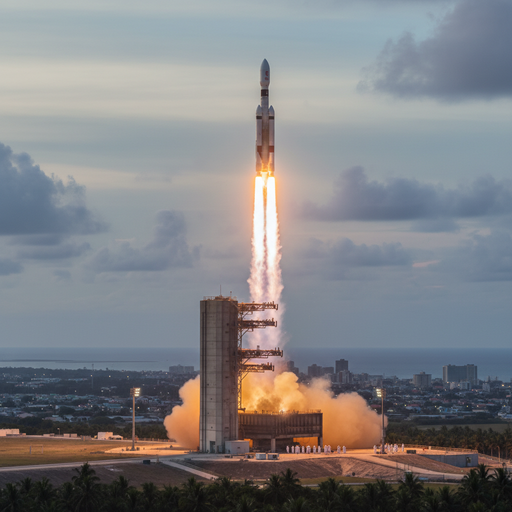
With SpaceX (founded in 2002), Musk pursued the seemingly impossible: revolutionizing the aerospace industry with reusable rockets. Tesla (founded in 2004) would transform the automotive sector toward electrification. Neuralink promised to connect human brains with machines. Each project represents a higher step in Musk’s vision for humanity—literally expanding our technological and territorial horizons.
Influence on the cryptocurrency ecosystem
In recent years, Elon Musk has had a significant impact on cryptocurrency markets through his social media comments. His tweets about Bitcoin and Dogecoin have notably influenced price volatility and public perception of digital assets. This ability to move markets with words demonstrates how his influence extends beyond his operational companies to impact global financial ecosystems.
His interest in cryptocurrencies reflects his ongoing pursuit of more efficient and decentralized financial systems, aligned with his philosophy of disruptive innovation. The crypto community sees him both as a promoter of revolutionary technology and as a controversial figure whose media influence raises questions about individual market power.
Health, productivity, and the lifestyle of a visionary
Musk is known for his intense work hours and relentless dedication. Although his diet and exercise routines do not follow strict professional athlete protocols, he maintains extraordinary levels of productivity. He prefers efficiency over formality: eats simple meals, often skipped during periods of maximum work activity, and engages in cardiovascular exercise and weightlifting occasionally.
This philosophy—where intellectual work and innovation take precedence over conventional health considerations—reflects his core values: technological progress as a higher imperative. For Musk, staying healthy is a means to remain productive, not an end in itself.
Elon Musk as a model for contemporary entrepreneurs
Musk’s trajectory inspires generations of entrepreneurs worldwide. Not only because of his accumulated wealth but also for his willingness to take colossal risks in uncharted industries. Tesla challenged the established automotive industry. SpaceX defied aerospace monopolies. Neuralink pursues the biologically impossible.
Young innovators see Musk not just as a successful financial figure but as a model of strategic long-term thinking, willingness to fail iteratively, and focus on transcendent goals—like making humanity multiplanetary—despite criticism or immediate media pressure.
Cultural impact: beyond technology
With his figurative and literal stature, Elon Musk has transcended his role as an entrepreneur to become a central figure in debates about the future of technology, energy sustainability, space exploration, and artificial intelligence. His public appearances, from conferences like SXSW to Tesla product launches, generate global media coverage and shape narratives about where civilization is headed.
His ability to explain complex concepts accessibly—whether about rocket physics or the importance of sustainable energy—has positioned him as a public intellectual whose opinions are analyzed, debated, and often move markets.
Elon Musk’s height, both his physical 188 centimeters and his monumental influence in technology, finance, and global culture, represents a unique confluence of physical characteristic, innovative genius, and media savvy. In the 21st century, where technology continually redefines who we are and where we are headed, figures like Musk—tall in both senses of the word—will remain inevitable references for future generations of business leaders and technological dreamers.