


Digital Iron Curtain! Russia fully blocks WhatsApp, promotes domestic Max for monitoring communications
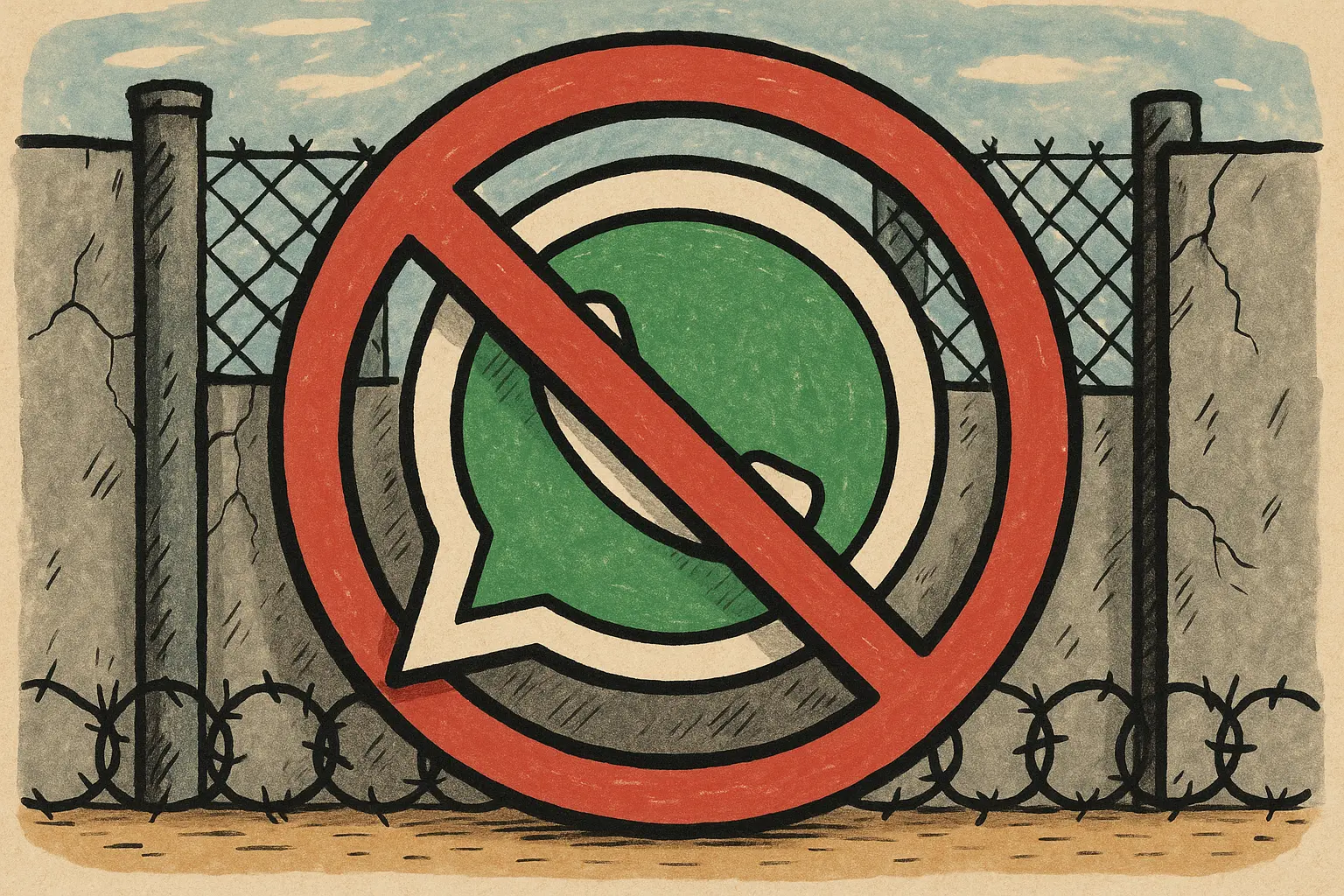
WhatsApp, an instant messaging app owned by social media giant Meta, has accused Russia of trying to block access to its app for millions of users, forcing them to switch to Russian state-owned alternatives. Launched in March 2025 by Russian tech company VK, Max, Moscow’s official support platform, aims to be a homegrown alternative to foreign services like WhatsApp and Telegram.
Digital Iron Curtain for 7,200 users
WhatsApp, an instant messaging app owned by social media giant Meta, has accused Russia of trying to block millions of users from accessing its app, forcing them to switch to Russia’s state-owned alternatives. The company posted on the X platform on Wednesday: “Trying to isolate more than 100 million users from private and secure communications is a step backwards and will only reduce the safety of the Russian population. We will continue to do everything we can to ensure that our users stay connected.”
According to estimates by SEO firm Backlinko, Russia has the world’s fourth-largest WhatsApp monthly active user base with 7,200 users, behind Indonesia (1.8 million), Brazil (1.4 million) and India (4.9 million). This size of the user base makes Russia one of the important markets for WhatsApp. If this market is completely lost, Meta’s global user count will decrease by about 3-4%, which will be a blow to its advertising revenue and network effects.
Launched in March 2025 by Russian technology company VK, Max, an officially supported platform in Moscow, aims to be a homegrown alternative to foreign services like WhatsApp and Telegram. Since then, the government has promoted the software heavily and made it mandatory for all smartphones sold in the country to come pre-installed with Max software from September 1. This kind of mandatory pre-installation policy is extremely rare in market economies and is usually only adopted by authoritarian governments.
Russia blocks WhatsApp in three stages
March 2025: Launched the domestic Max app and started publicity
September 2025: Force all new phones to come pre-installed with Max
Early 2026: Start restricting WhatsApp call functionality
February 2026: Completely blocks WhatsApp domains, requires a VPN to access
This gradual blockade strategy shows the Russian government’s careful planning. First, the alternative is introduced to give users a choice, then the pre-installation is forced to increase exposure, and then the WhatsApp function is gradually restricted, and finally completely blocked. This method of “boiling frogs in warm water” is less likely to trigger a strong backlash than a sudden lockdown.
The real purpose of the Max monitoring app
Russian media reported that WhatsApp was inaccessible. Moscow-based Russian online news site Gazeta.ru reported on Wednesday that WhatsApp’s domain has been completely blocked and will not be accessible without a VPN or similar workaround. The media also quoted a report from Russia’s state news agency TASS that presidential press secretary Dmitry Peskov said that for Russia to unblock WhatsApp, it would need the communication service to comply with Russian laws and show a willingness to negotiate.
What are the specific requirements for so-called “compliance with Russian law”? Moscow began restricting some calls on WhatsApp and Telegram last year, accusing the platforms of failing to share information with law enforcement and not storing Russian user data on the country’s borders. The essence of this requirement is that the government wants to be able to monitor user communications.
WhatsApp uses end-to-end encryption, so in theory, even Meta itself can’t read the content of user messages, let alone share them with the government. If WhatsApp agrees to Russia’s demands, it will need to create a backdoor or weaken encryption, which will completely undermine its core selling point of privacy protection. Therefore, it is almost impossible for WhatsApp to accept such a request, and the ban can be long or even permanent.
Max’s commitment to privacy protection as a government-backed app is highly questionable. While VK claims that Max also offers encryption features, as a Russian company, it is necessarily governed by Russian law. If the government requests user data or monitors specific audiences, it is almost impossible for Max to refuse. This “official monitoring tool” characteristic makes Max a taboo for dissidents, journalists, and ordinary privacy-conscious users.
In January, Andrei Svintsov, a member of the Russian State Duma (the lower house of the Russian state legislature), told TASS that the country’s telecommunications regulator would take steps to completely ban WhatsApp by the end of 2026. This timeline suggests that the current blocking may be just the beginning, and there may be stricter technical blocking measures in the future, such as deep packet inspection DPI, to prevent VPN bypasses.
The rise of decentralized communication in Uganda and Madagascar
Other countries have reportedly used communication restrictions during times of conflict. In December, Ugandan politician and opposition leader Bobi Wine encouraged his supporters to download Jack Dorsey’s decentralized peer-to-peer instant messaging service Bitchat (possibly referring to Nostr or other decentralized communication tools) and accused the government of planning to cut communications ahead of the election.
Meanwhile, the African island nation of Madagascar experienced a surge in Bitchat downloads in September during protests and communication disruptions; This follows similar increases in Bitchat downloads in Nepal and Indonesia during the turmoil earlier in the month. These cases show that when centralized communication services are blocked or restricted by the government, the demand for decentralized alternatives skyrockets.
The advantages of decentralized communication tools are that they can be blocked without a central server, peer-to-peer transmissions are difficult to monitor, and often use strong encryption to protect privacy. But these tools also have disadvantages: the user experience is often inferior to established products like WhatsApp, weak network effects (friends are useless when friends are not on it), and higher technical barriers (need to understand concepts such as public and private keys).
For Russian users, the current options are: accept Max and give up privacy, use a VPN to continue using WhatsApp but risk breaking the law, or switch to alternatives like Telegram that have not yet been completely blocked. Although Telegram is also a foreign service, its founder Pavel Durov has a complicated relationship with the Russian government, and Telegram’s status in Russia is relatively special. Many Russian users may end up choosing Telegram as a compromise.
Globally, Russia’s approach could serve as a model for other authoritarian governments to follow. China has long blocked WhatsApp and promoted WeChat, and countries such as Iran and Turkey often restrict foreign communication services. This confrontation between “digital sovereignty” and “freedom of communication” is becoming a new battlefield in geopolitics. Decentralized communication tools may find room in this environment, but they still need to overcome obstacles to user experience and network effects to become truly popular.