


Bitcoin Ransom Wallet Springs to Life: New Transaction Detected in Nancy Guthrie Kidnapping Case
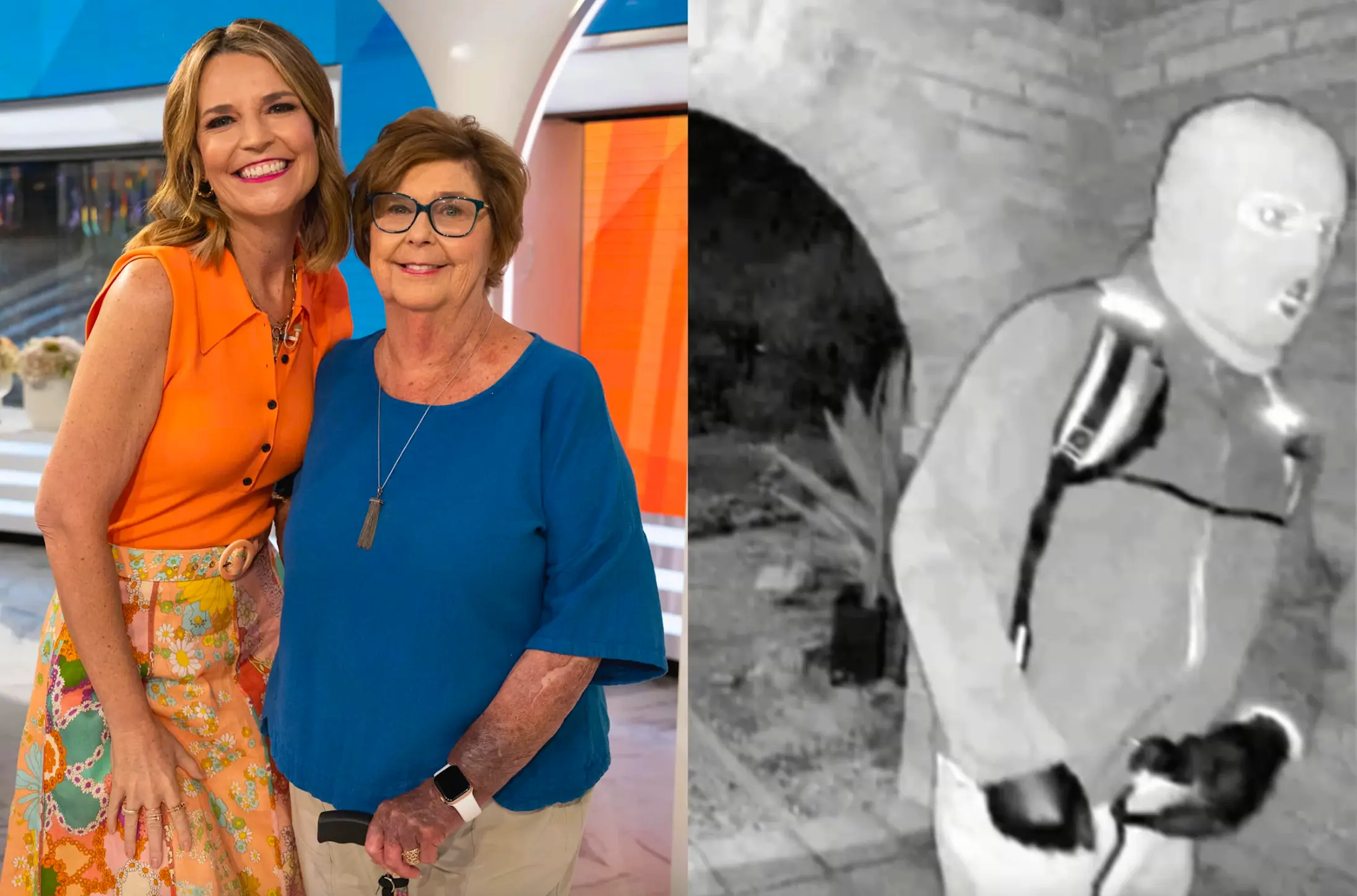
In a dramatic development, the Bitcoin wallet address listed in the ransom note for missing 84-year-old Nancy Guthrie has recorded its first transaction—a movement of less than $300. This comes hours after the FBI released chilling surveillance footage of a masked, armed suspect. We examine the blockchain forensics, the detained person’s release, and what crypto trail could mean for the investigation.
The Bitcoin Trail Reawakens: What the Wallet Activity Really Means
On February 10, 2026, just after 6:30 p.m. CT, the digital silence broke. TMZ founder Harvey Levin reported that the Bitcoin wallet address—the one printed in the first ransom note sent to media outlets, demanding millions for the safe return of Nancy Guthrie—had recorded activity for the first time since its details became public . Local Tucson station KGUN 9 later confirmed the transaction amount was less than $300 .
This is not a payout. It is not a $6 million transfer. But in the world of blockchain forensics, it may be something far more valuable: a fingerprint.
The activity occurred roughly 25 minutes before Levin’s report, placing it squarely in the aftermath of the FBI’s release of doorbell camera footage showing a masked, armed man tampering with Guthrie’s Nest camera on the morning of her disappearance . The timing suggests either a deliberate test transaction, a careless digital footprint, or—as some investigators privately theorize—an attempt by the abductor(s) to confirm the wallet was being monitored.
Whatever the intent, the movement changes the calculus. A Bitcoin address that once existed only as text on a ransom note is now a live investigative node.
The Masked Man, The Camera, and The Plant: FBI Releases Breakthrough Footage
To understand why this $300 transaction matters, you must first understand what happened just hours earlier.
On the morning of February 10, FBI Director Kash Patel released four black-and-white images and two short video clips recovered from Nancy Guthrie’s Nest doorbell system . The footage, previously thought lost or corrupted, was resurrected through forensic work with private sector partners who accessed residual data in backend cloud systems .
The videos show a man wearing a ski mask, gloves, a jacket, and a backpack. He carries what appears to be a holstered handgun on his waistband. He approaches the door, cups the camera lens with his gloved hand, and tilts his head away. He retreats to the yard, picks up vegetation, and returns—flashlight held in his mouth—to stuff plant matter over the lens .
This is not the work of a sophisticated operative. It is the work of someone who understands that cameras exist, but fundamentally misunderstands how they store data.
Savannah Guthrie, Nancy’s daughter and NBC’s Today show anchor, reposted the footage on Instagram with a direct plea: “Someone out there recognizes this person. We believe she is still alive. Bring her home” .
Carlos, The Deliveryman, and The Traffic Stop That Went Nowhere
On the same day the Bitcoin wallet moved, law enforcement activity surged elsewhere. The Pima County Sheriff’s Department confirmed deputies detained a subject during a traffic stop south of Tucson . The man was questioned in connection with Guthrie’s disappearance.
Hours later, he was released.
The man, identified only as Carlos, spoke to reporters outside his home. A deliveryman by trade, he said he had noticed authorities following him. He insisted he did not know who Nancy Guthrie was. “I don’t follow the news,” he told CBS News. “I hope they get the suspect, because I’m not it” .
His mother-in-law, standing nearby, was less measured: “They’re just invading my property.”
The detention, though brief, signaled that investigators are casting a wide net. The FBI has emphasized there are “multiple persons of interest” in the case, and the search of a Rio Rico property—approximately 60 miles south of Tucson, near the U.S.-Mexico border—indicates they are not limiting the geography of their inquiry .
Blockchain Forensics: Why Sending a Real Bitcoin Address Was the Suspect’s ‘Achilles’ Heel’
In the ransom note, the sender made a choice. They could have demanded payment in Monero, which offers stronger privacy protections. They could have demanded cash, gift cards, or wire transfers. Instead, they provided a real, verifiable Bitcoin address—one that now sits on a public, permanent, and transparent ledger.
Bezalel Eithan Raviv, CEO of crypto recovery firm Lionsgate Network, did not mince words. “He showed his Achilles to everyone who understands blockchain forensics,” Raviv told Page Six .
Raviv explained that the inclusion of a live wallet address is often the single greatest mistake cybercriminals make. “Whenever cyber criminals offer their wallet address is where they basically reveal themselves in many ways,” he said .
How Investigators Trace Crypto: Three Core Techniques
Test Transactions: Sending a small amount (sometimes less than $1) to the suspect’s wallet and watching where it moves. This is the method investigators likely employed, which may explain the sub-$300 transaction observed by KGUN 9.
Cluster Analysis: Mapping all addresses controlled by the same entity through analysis of transaction patterns and spending behavior.
Off-Ramp Surveillance: Monitoring exchanges where crypto converts to fiat currency. When the suspect cashes out, they must interact with a regulated entity.
Raviv noted a persistent misconception: “Most people still, in 2026, do not believe you can trace crypto. And a lot of people in 2026 still believe you cannot recover crypto. And these are all nonsense ideas because we have shifted so much” .
The implication is clear: if the person who sent that ransom note also controls the private keys to the wallet that just received activity, their digital shadow is now being tracked across every blockchain node.
The Ransom Note’s Anatomy: Deadlines, Demands, and Unanswered Questions
The ransom note first arrived in the inboxes of TMZ and two Tucson television stations . It demanded $6 million in Bitcoin, deposited to a specified wallet address, in exchange for Nancy Guthrie’s safe return . It contained two deadlines: February 5 and February 9.
Both have now passed. Nancy Guthrie has not been returned.
The FBI has neither confirmed nor denied the note’s authenticity. Director Patel stated that authorities are reviewing “new messages” sent to media outlets, and that any purported communications from the kidnappers are being treated as potential evidence . Notably, one early ransom message led to the arrest of a Los Angeles man who was attempting to exploit the case for fraudulent crypto payments—he was not connected to Guthrie’s disappearance .
Savannah Guthrie, speaking directly to the camera in multiple Instagram videos, has made the family’s position unequivocal: “We will pay. Please, reach out to us. We want to hear from you, and we are ready to listen” .
Thus far, there has been no verified response.
A Fragile Victim: Nancy Guthrie’s Health Emergency
The urgency of the search is compounded by Nancy Guthrie’s medical condition. The 84-year-old suffers from high blood pressure, mobility issues, and a heart condition requiring daily medication . She was last seen at her home in Catalina Foothills, an affluent suburb northeast of Tucson, on the evening of January 31, after her son-in-law dropped her off following dinner.
The following morning, her pacemaker monitoring app—an application that connects her implanted cardiac device to her phone—was found to be disconnected . Blood discovered on her front porch was confirmed by DNA analysis to be hers .
Sheriff Chris Nanos has been direct with the press: “Time is not on our side” .
Savannah Guthrie, in her public statements, has framed the health crisis as both a plea and an indictment: “She is without any medicine. She needs it to survive. She needs it not to suffer” .
The Investigation Today: What Law Enforcement Is Doing Now
As of February 11, 2026, the Pima County Sheriff’s Department and FBI continue to operate a 24-hour command post in Tucson, staffed with crisis management experts, analytic support, and investigative teams . A $50,000 reward remains in effect for information leading to Nancy Guthrie’s return and the arrest and conviction of those responsible .
Surveillance footage has been recovered. A Bitcoin wallet has moved. A detained man has been released. But the core questions remain unanswered:
Is Nancy Guthrie still alive? Is the ransom note genuine? And who is the man in the ski mask?
Why This Case Is Different: The Intersection of True Crime and Crypto Literacy
This is not the first kidnapping case to involve a cryptocurrency demand. It will not be the last. But the Nancy Guthrie case arrives at a peculiar inflection point: public understanding of blockchain traceability has never been higher, yet the suspect(s) still made a fundamental forensic error.
The gap between popular perception—that Bitcoin is anonymous—and technical reality—that Bitcoin is pseudonymous and permanently auditable—is closing. Raviv’s frustration is the frustration of an industry that has spent years educating law enforcement and the public, only to see criminals repeat the same mistakes .
There is another layer here that has received less attention: the ransom note was emailed. Email, unlike cryptocurrency, leaves an immediately accessible metadata trail. Headers, IP addresses, timestamps, device fingerprints. If the suspect used a personal or poorly secured email account, the forensic return may come far faster than any blockchain analysis.
What Comes Next: The Critical Windows
In the coming days, three developments are worth watching.
First, additional wallet activity. If the suspect attempts to move, consolidate, or cash out the funds (including the recent sub-$300 deposit), they will expose themselves to exchange compliance protocols.
Second, forensic returns from the Nest camera recovery. The FBI stated that the footage was reconstructed from “residual data located in backend systems” . If similar recovery methods can be applied to other devices in Guthrie’s home, additional evidentiary material may emerge.
Third, public tip generation. Savannah Guthrie’s direct appeals have reached millions. The FBI believes someone recognizes the masked man. The question is whether that recognition will translate into a call.
Conclusion: A Wallet Is Not a Voice, But It Is a Signal
The Bitcoin wallet moved. It moved a small amount, at a specific time, under specific circumstances. In forensic terms, that is not a resolution. It is, however, a signal.
For Nancy Guthrie’s family, the signal offers a thin thread of hope: someone is watching. For investigators, it offers a target: someone controlled that wallet. For the public, it offers a reminder that in 2026, cryptocurrency is no longer the perfect vehicle for anonymous crime.
The man in the ski mask thought covering a camera lens was enough. He thought demanding Bitcoin erased his tracks. He was wrong on both counts.
The wallet moved. The investigation moves with it.
Related Articles
Ethereum Co-Founder Drops Bitcoin Doomsday Warning
Bitcoin Moves With Tech Stocks, Not Gold, Grayscale Research Shows
Bitcoin Sees $2.3B in Realized Losses As Capitulation Intensifies
Dead Cat Bounce or Bottoming Out? Bitcoin Bulls Face Harsh Reality Check
Analysis: The crypto market correction may be influenced by traditional financial factors, not an industry crisis.