BabaJi

vip
Age 0.8 Yıl
Peak Tier 5
No content yet
#BuyTheDipOrWaitNow? 🧠📉📈
Markets love to test patience before they reward conviction.
After recent volatility, traders are split into two emotional camps:
“This is the dip — buy aggressively” vs “Something feels off — stay sidelined.”
Both sound confident. Only one will be right this time.
Let’s slow it down and look beneath the noise.
1️⃣ The Dip Is Obvious — That’s the First Red Flag
When everyone sees the dip, the market usually isn’t done yet.
Funding rates reset, but haven’t flipped deeply negative
Spot demand exists, but lacks urgency
Options markets show rising implied volatility — u
post-image
  • Reward
  • 6
  • Repost
  • Share
Lock_433vip:
2026 GOGOGO 👊
View More
🏆 Today's Live|Gate 2025 Community Annual Awards · Night of Honor The annual rankings will be revealed tonight! Top streamers, creators, and community contributors will be honored live — don’t miss Gate’s biggest community night of the year. 🎉 Join the livestream and enjoy: 1️⃣Multiple rounds of red packet drops 2️⃣Live interactive quiz giveaways 3️⃣Official merch, trading trial vouchers, VIP5 and more rewards Watch, grab red packets, join the quiz, and win prizes — all in one show. 📅 Time: Tonight 12:00 (UTC) 📍 Watch live here: https://www.gate.com/live/video/1de9e10983b44c59a766fbfd3
GateLivevip
🏆 Today's Live|Gate 2025 Community Annual Awards · Night of Honor
The annual rankings will be revealed tonight!
Top streamers, creators, and community contributors will be honored live — don’t miss Gate’s biggest community night of the year.
🎉 Join the livestream and enjoy:
1️⃣Multiple rounds of red packet drops
2️⃣Live interactive quiz giveaways
3️⃣Official merch, trading trial vouchers, VIP5 and more rewards
Watch, grab red packets, join the quiz, and win prizes — all in one show.
📅 Time: Tonight 12:00 (UTC)
📍 Watch live here:
https://www.gate.com/live/video/1de9e10983b44c59a766fbfd3dfed794?type=live
repost-content-media
  • Reward
  • Comment
  • Repost
  • Share
Gate Live Spring Festival Streamer Leaderboard — Live Now 🧨 If not now, when? The best time to climb the ranks is during Spring Festival. 🏆 Existing Streamers Stream more, earn more — up to $100 cash + Spring Festival Gift Box 🎁 New Streamers First stream bonus: +20% points + $50 cash + Spring Festival Gift Box 📈 Rankings update in real time — the earlier you start, the bigger the advantage 👉 Go live or join now: https://www.gate.com/campaigns/3937
GateLivevip
Gate Live Spring Festival Streamer Leaderboard — Live Now
🧨 If not now, when? The best time to climb the ranks is during Spring Festival.
🏆 Existing Streamers
Stream more, earn more — up to $100 cash + Spring Festival Gift Box
🎁 New Streamers
First stream bonus: +20% points + $50 cash + Spring Festival Gift Box
📈 Rankings update in real time — the earlier you start, the bigger the advantage
👉 Go live or join now: https://www.gate.com/campaigns/3937
repost-content-media
  • Reward
  • Comment
  • Repost
  • Share
HighAmbitionvip
#BuyTheDipOrWaitNow?
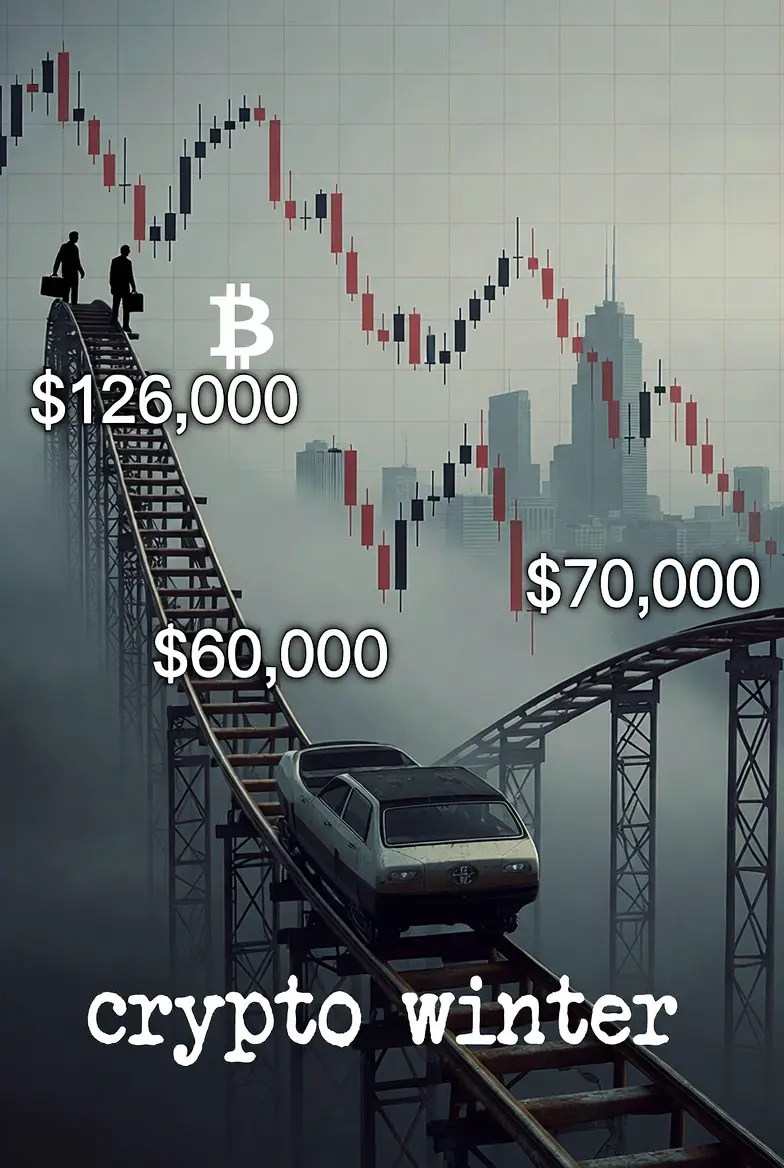
The crypto market, especially Bitcoin, is in a rough spot right now (early February 2026). BTC recently dipped hard—briefly touching around $60,000 after peaking over $126,000 in late 2025—losing nearly 50% from its all-time high. It bounced back somewhat, trading around $70,000 recently after a sharp rebound, but the overall sentiment is bearish with talk of a "crypto winter" kicking in.
Here's a balanced breakdown of the key points to consider for Buy the Dip or Wait? (No financial advice—just facts and common arguments from current market analysis.)
Reasons to Buy the Dip Now
Historical pattern: Bitcoin has survived multiple crashes (2018, 2022) and always recovered stronger. Long-term holders who bought dips since 2009 have almost always profited eventually.
Rebound signs: After hitting lows near $60k, it quickly jumped back above $70k in some sessions, showing strong buying interest at lower levels. Some experts call this a potential bottom or at least a relief rally.
Long-term optimism: Institutional adoption (ETFs, etc.) is still growing despite outflows. If you believe in Bitcoin as "digital gold" or a hedge against inflation/long-term store of value, lower prices = better entry.
Fear is high: Sentiment is at lows not seen since 2022 crashes—extreme fear often marks capitulation and good buying opportunities.
Reasons to Wait (or Be Cautious)
Downward momentum: The drop started in late 2025/early 2026 due to macro pressures (higher rates, tech sell-off, liquidity issues), profit-taking by big holders ("whales" reducing supply), ETF outflows, and broader risk-off in markets. It could go lower—some analysts see risks to $50k or even $25k–$40k if it mirrors past bear markets (70–80% drawdowns).
No clear bottom yet: On-chain data shows whales/sharks selling, leverage unwinding, and stablecoin flows dropping—classic bear market signals. Predictions point to possible further downside into mid/late 2026 before a real recovery.
Volatility & risks: Geopolitical uncertainty, regulatory stalls, and correlation with stocks/tech mean more pain could come. If macro gets worse (e.g., recession fears), crypto could bleed more.
Not for everyone: Advisors say limit crypto to 5% of portfolio max due to extreme swings. If you're short-term or can't handle more drops, waiting for clearer stabilization makes sense.
My Take (Neutral View)
Right now, it's a classic dilemma: aggressive dip-buyers see value and load up gradually (dollar-cost averaging), while conservative ones wait for confirmation of a bottom (e.g., higher lows, reduced selling pressure). No one knows exactly—crypto is unpredictable.
If you're long-term bullish on BTC and have cash you're okay risking, averaging in during these levels could pay off historically. But if you're worried about further downside or need the money soon, sitting on the sidelines or waiting for more stability isn't dumb either.
repost-content-media
  • Reward
  • 1
  • Repost
  • Share
Discoveryvip:
2026 GOGOGO 👊
repanzalvip
#BuyTheDipOrWaitNow?
The question everyone in crypto is asking right now isn’t whether the market will move — it’s when and in which direction. “Buy the dip or wait?” sounds simple, but the answer depends on multiple overlapping factors. Let’s break it down properly, point by point, so you can decide with clarity instead of emotion.
1️⃣ Current Market Structure: Dip or Distribution?
Not every dip is a buying opportunity.
If the market is making higher lows, dips usually indicate healthy pullbacks within an uptrend.
If price keeps failing to reclaim key resistance levels, the dip could be distribution before another leg down.
Right now, many major assets are consolidating in tight ranges, showing indecision, not panic. This suggests the market is waiting for a macro or liquidity trigger rather than collapsing.
2️⃣ Bitcoin Dominance: The Silent Signal
Bitcoin dominance plays a crucial role in this decision.
Rising BTC dominance usually means investors are risk-off, preferring Bitcoin over altcoins.
Falling BTC dominance signals capital rotation into alts, often marking early alt-season phases.
At present, dominance remains relatively strong, meaning selective buying makes more sense than aggressive altcoin accumulation.
3️⃣ Liquidity & Volume: Follow the Smart Money
Volume tells the truth price tries to hide.
Dips on low volume often indicate lack of sellers, which can be bullish.
Dips on high volume may confirm stronger selling pressure.
Currently, volume spikes are limited, suggesting smart money is waiting, not exiting aggressively. This favors a scaled entry approach rather than an all-in buy.
4️⃣ Macro Factors: The Bigger Picture
Crypto doesn’t move in isolation. Key macro elements include:
Interest rate expectations
US dollar strength (DXY)
Bond yields and global liquidity trends
When rates stay higher for longer, markets hesitate. Until clearer signals of liquidity easing appear, patience remains a valid strategy.
5️⃣ Sentiment Check: Fear, Hope, or Confusion?
Extreme fear creates opportunities. Extreme greed creates traps.
Right now, sentiment sits in a confused middle zone:
Retail is cautious
Institutions are selective
Leverage is lower than euphoric tops
This environment often favors strategic accumulation, not emotional trading.
6️⃣ Technical Zones: Levels Matter More Than Opinions
Buying randomly during a dip is gambling.
Better approach:
Identify strong demand zones
Watch daily and weekly support levels
Confirm with RSI, moving averages, and trend structure
If price holds higher-timeframe support, buying partial positions makes sense. If those levels break, waiting protects capital.
7️⃣ Altcoins vs Bitcoin: Same Strategy? No.
Bitcoin: More resilient, safer for early entries.
Altcoins: Higher risk, higher reward — but only after confirmation.
Right now, Bitcoin looks better for gradual accumulation, while altcoins require patience and confirmation.
8️⃣ Risk Management: The Deciding Factor
The real question isn’t buy or wait, it’s:
Do you have a plan if price goes against you?
Smart traders:
Use DCA instead of lump sum
Keep dry powder for deeper moves
Avoid over-leveraging
Think in weeks and months, not hours
Final Verdict: Buy the Dip or Wait?
Buy the dip — if you’re scaling in, focusing on strong assets, and respecting key levels.
Wait — if you need confirmation, macro clarity, or better risk-reward zones.
There is no single correct answer — only disciplined execution.
In this market, patience is also a position.
repost-content-media
  • Reward
  • 1
  • Repost
  • Share
Discoveryvip:
2026 GOGOGO 👊
Yusfirahvip
#PartialGovernmentShutdownEnds
The partial U.S. federal government shutdown that began after funding lapsed at midnight ET on January 31, 2026 officially concluded on February 3, 2026, after President Donald Trump signed a large-scale funding bill into law, ending a brief but market-sensitive disruption that, while short in duration, carried outsized implications for risk sentiment, liquidity behavior, and crypto market volatility. The shutdown lasted roughly three to four days, affecting close to half of federal agencies after a prior continuing resolution expired over the weekend, making it one of the shortest shutdowns in recent U.S. history, yet it occurred at a fragile macro moment where markets were already dealing with tightening financial conditions, elevated leverage, and heightened political uncertainty. The Senate had passed a revised funding package on January 30 by a wide 71–29 margin, but the House delayed reconvening until February 2 due to scheduling, ultimately approving the bill on February 3 by a narrow 217–214 vote that reflected deep partisan fractures, with notable opposition from within both parties. President Trump signed the bill later that afternoon, calling it a victory for stability, triggering the immediate reopening of agencies, with most federal employees returning to work by February 4 and government operations largely normalized by early February 5. The funding package totaled approximately $1.2 trillion and provided full-year appropriations through September 30, 2026 for major departments including Defense, Labor-HHS-Education, Transportation-HUD, State and Foreign Operations, and Financial Services and General Government, including Treasury, while leaving the Department of Homeland Security funded only through February 13 under a short-term continuing resolution, effectively creating a new funding cliff centered on immigration and border enforcement negotiations. Importantly, the legislation mandated retroactive back pay for furloughed federal workers, ensuring no permanent income loss and significantly reducing potential consumer-side economic drag. In terms of operational impact, the shutdown temporarily affected non-essential functions across Defense administration, Treasury, State, Transportation-HUD, Judiciary operations, and various executive offices, while essential services such as USPS, Social Security payments, air traffic control, national security, Veterans Affairs, NASA, and Congress itself continued largely uninterrupted, preventing the kind of widespread service disruptions seen in longer shutdown episodes. From a macroeconomic perspective, the shutdown was estimated to impact well under one percent of overall U.S. economic activity, with no immediate measurable GDP drag, and traditional financial markets treated the episode as contained political noise rather than a systemic threat, as equities saw only minor, short-lived dips, bond yields remained stable, and Treasury market liquidity showed no signs of stress. Crypto markets, however, reacted far more aggressively, reflecting their heightened sensitivity to uncertainty, leverage dynamics, and liquidity shocks. During the January 31 to February 3 window, Bitcoin fell sharply from pre-shutdown levels near $83,000 to intraday lows around $72,800, marking a roughly 12–14 percent drawdown in a matter of days and printing its lowest levels since late 2024, while Ethereum underperformed further, sliding toward the $2,150–$2,200 range and recording steeper percentage losses, with many altcoins such as Solana and XRP experiencing accelerated declines as risk-off behavior spread across the market. Market sentiment deteriorated rapidly, with fear indices shifting into extreme fear territory as concerns mounted over delayed economic data releases, stalled regulatory processes at the SEC and CFTC, and the possibility of prolonged fiscal dysfunction. Liquidation dynamics played a central role in amplifying the sell-off, with over $1.6 billion in crypto positions wiped out in a single session at the peak of panic, the vast majority of which were long positions, highlighting how leverage-heavy positioning turned a macro headline into a cascading forced-sell event. Trading volumes surged sharply across both futures and spot markets, with large red candles confirming panic exits and margin calls, while spot liquidity thinned temporarily, widening bid-ask spreads and increasing short-term volatility. ETF flows added another layer of pressure, as Bitcoin spot ETFs recorded heavy single-day outflows led by major issuers, while smaller but notable inflows into select altcoin ETFs suggested early-stage capital rotation rather than a full exit from digital assets. Once the funding bill was signed on February 3 and agencies reopened, uncertainty eased quickly, triggering a relief-driven rebound across crypto markets, with Bitcoin bouncing from its lows back toward the mid-$75,000 area, recovering roughly 3–5 percent from the bottom within hours, Ethereum stabilizing and reclaiming part of its losses, and broader market capitalization finding a temporary floor. Liquidation flows flipped toward short covering during the rebound, volumes remained elevated but shifted in tone, and liquidity conditions normalized rapidly as spreads tightened and institutional participation began to re-emerge. Looking forward, the rapid resolution of the shutdown limited long-term damage, but risks remain, particularly around the February 13 DHS funding deadline, which could reignite political uncertainty, while crypto markets remain tightly linked to broader macro drivers such as Federal Reserve policy expectations, risk appetite, and leverage conditions. The key takeaway is that while the shutdown itself was short and economically contained, it served as a reminder that even brief political disruptions can act as powerful volatility catalysts in crypto markets, where structural leverage and sentiment can transform modest macro events into sharp price dislocations, making risk management and liquidity awareness critical in such environments.
repost-content-media
  • Reward
  • 1
  • Repost
  • Share
Discoveryvip:
2026 GOGOGO 👊
Yusfirahvip
#Web3FebruaryFocus
Web3 has entered a period that may appear quiet on the surface but is, in reality, a critical inflection point. The days when narratives, hype, or viral attention could sustain entire ecosystems are ending. The question is no longer whether ideas are novel or exciting, but whether they can survive scrutiny—regulatory, technical, economic, and human. February is less about another speculative cycle and more about endurance: can the architectures and concepts of the last decade function as real, lasting infrastructure? Decentralization is no longer a slogan; it has become a series of complex trade-offs: openness versus safety, speed versus verifiability, ideology versus usability. Projects that gain traction will be those willing to embrace these trade-offs and engineer around complexity rather than pretending it does not exist.
DeFi: Learning the Language of Risk
The first generation of decentralized finance proved the possible: exchanges, lending markets, and derivatives could exist without central operators, composed in a modular, open-source manner. Yet, early DeFi also revealed fragility when token incentives replaced genuine revenue streams. Liquidity mining, though brilliant for bootstrapping ecosystems, proved an unstable long-term foundation. Many protocols grew large quickly, only to collapse under the weight of poorly designed incentives and systemic vulnerabilities.
Today’s DeFi wave is markedly more disciplined. Tokenized treasuries, on-chain credit desks, and professionally managed vaults are importing practices refined over centuries in traditional finance: hierarchical collateralization, duration management, risk-weighted asset allocation, and transparent stress testing. These mechanisms aim to ensure that platforms do not rely purely on speculative token economics but can operate sustainably. Importantly, this is not a capitulation to legacy finance; it is an acknowledgment that finance is fundamentally about time, probability, and risk distribution.
If DeFi can intermediate real assets efficiently while remaining auditable and permissionless, it may finally deliver on promises banks rarely achieve: a global ledger where trust arises from verification rather than reputation. The unresolved question remains whether this evolution can occur without new concentrations of power forming—through oracles, risk committees, or dominant user interfaces—essentially trading one form of centralization for another. February’s experiments in composability, treasury management, and risk engineering will reveal which protocols can survive this test.
AI and Crypto: The Birth of Non-Human Economies
Artificial intelligence is increasingly capable of planning, optimizing, and generating value. Yet AI currently operates without a native economic environment. Blockchains provide precisely what AI lacks: accounts that no corporation controls, payment settlement without intermediaries, and immutable transaction histories. By integrating AI agents into blockchain ecosystems—complete with wallets, programmable incentives, and smart contracts—software can evolve from being a passive tool to an active market participant.
An AI agent with economic agency could pay for computation, compensate data providers, or hire other agents autonomously. This fundamentally shifts the conversation from automation—machines replacing human labor—to autonomy—machines operating as independent economic entities. Markets, historically a reflection of human intention, may soon include actors whose motives are statistical, evolving, and algorithmic.
February’s ongoing experiments with agent identities, reputation systems, and on-chain provenance are early attempts to define the “etiquette” for such non-human participants. But this progress carries both technical and ethical risks. How do we assign responsibility when a smart agent acts autonomously, yet interacts with humans and legally binding contracts? How do we prevent moral hazard or unforeseen externalities when counterparty risk is algorithmic? The answers to these questions may define the rules of engagement for the next generation of digital economies.
Interoperability: Beyond Chain Nationalism
The multichain era sparked innovation but also created fragmentation resembling medieval trade routes, littered with toll bridges. Users experienced this as confusing wallets, fragile bridges, and isolated liquidity pools. While innovation flourished, the lack of seamless value transfer created significant friction.
Emerging solutions such as intent-based routing, account abstraction, and composable cross-chain messaging aim to make the underlying infrastructure invisible to users. Value should move as seamlessly as information flows across the internet, without users needing to navigate technical complexity.
However, abstraction carries risks. Whoever controls the layer that hides complexity can influence behavior and extract rent, potentially concentrating power under a veneer of decentralization. February is likely to be a pivotal month for federated interoperability, testing whether cross-chain systems can scale without recreating centralized chokepoints. The challenge is to ensure that decentralization remains meaningful, even as the user experience improves.
Consumer Crypto: The Humility of Usefulness
No technical architecture matters if it fails to deliver tangible benefits to ordinary users. After years dominated by traders and speculative cycles, attention is returning to utility: digital games where ownership has meaning, social networks where identity is portable, and cross-border remittance systems where stablecoins quietly outperform traditional banking infrastructure.
The lesson is simple yet humbling: most users prioritize reliability over ideology. Stablecoins, already functioning as everyday money in regions with weak fiat currencies, may represent the first mass-market adoption of crypto. February’s consumer-focused experiments will test whether this monetary foothold can expand into broader digital lifenwithout relying on speculative rewards or hype. Projects that succeed here may define Web3’s real-world relevance for years to come.
Regulation as Architecture, Not Threat
Law and regulation, once seen as external threats, are now internal design parameters. Institutions require accountability, consumer protections, and auditable controls. In response, protocols are evolving, integrating identity layers, compliance frameworks, and governance mechanisms that resemble constitutional structures more than code repositories.
This shift forces Web3 to confront its own narratives. Decentralization has never meant the absence of power it has meant its distribution. Protocols must encode checks and balances into software without recreating opaque hierarchies reminiscent of legacy institutions. In February, we will see which projects can navigate these constraints while maintaining openness and user trust.
Bitcoin’s Expanding Frontier
Bitcoin has long prioritized minimalism and immutability, treating its base layer as a sacred monument. Recent developments Layer 2 networks, BTC-backed financial products, and new token standards signal a community negotiating between purity and practical utility.
This evolution raises fundamental questions: does these innovations strengthen Bitcoin’s role as pristine collateral and a monetary anchor, or do they dilute its ideological narrative? The answer is not obvious, but it demonstrates a broader truth: even the most conservative, resilient systems must adapt when economic demand evolves. February will likely reveal whether Bitcoin’s base layer can remain robust while Layer 2 and financial innovation flourish.
The Deeper Currents Shaping February
Beneath every headline are enduring tensions: verification versus convenience, autonomy versus responsibility, abstraction versus control, and global openness versus local law. These are not mere technical debates they are questions about how digital civilization organizes trust, authority, and coordination at planetary scale.
Web3 has become a laboratory for political economy: experimenting with property, identity, coordination, and governance. The coming months will not deliver final answers but will reveal which communities, protocols, and governance systems are mature enough to confront these questions honestly. The industry is leaving adolescence: fewer spectacles, more architecture; fewer slogans, more balance sheets. This transition may seem uneventful to traders but is historically profound.
Key Metrics to Watch in February
Can DeFi revenues sustainably exceed incentive-driven growth?
Will stablecoins demonstrate widespread real-world usage beyond exchanges?
Are genuinely autonomous AI agents beginning to emerge?
How is power concentrating inside chain-abstraction and interoperability layers?
Can institutions meaningfully participate without eroding openness and decentralization?
The story of Web3 is no longer just a story of innovation it is a story of how humans organize trust, responsibility, and economic activity in a digital age. February represents a critical moment: the industry’s ideas are no longer theoretical, and the next phase will determine which protocols, communities, and principles endure. Which of these currents will shape the next decade remains the central question.
repost-content-media
  • Reward
  • Comment
  • Repost
  • Share
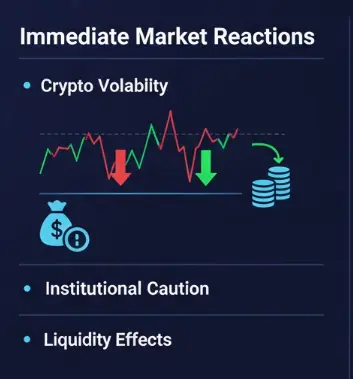
BTC Options Market Is Speaking — Are You Listening? 👀📊
Gate Research data shows BTC implied volatility has surged to the 81st percentile over the past year, signaling rising expectations for near-term price movement.
🔍 What stands out:
• BTC IV ~50% | ETH IV ~70%
• 25-delta skew stays negative → downside hedging demand rising
• Short-term curve steepening, while mid-long term remains stable
• Put spreads dominating large block trades — protection, not panic
📉 Institutions aren’t betting on a crash — they’re defending short-term risk while waiting for clearer direction.

💡 To help traders a
BTC-4,23%
ETH-5,27%
post-image
  • Reward
  • 2
  • Repost
  • Share
Yusfirahvip:
Buy To Earn 💎
View More
#FedLeadershipImpact captures the critical influence that Federal Reserve leadership has on financial markets, economic stability, and investor behavior. As the central bank of the United States, the Federal Reserve’s policy direction is not shaped by data alone, but also by the philosophy, communication style, and strategic priorities of its leadership. Changes in tone, guidance, or leadership approach can have immediate and long-lasting effects across global markets.
Falcon_Officialvip
#FedLeadershipImpact captures the critical influence that Federal Reserve leadership has on financial markets, economic stability, and investor behavior. As the central bank of the United States, the Federal Reserve’s policy direction is not shaped by data alone, but also by the philosophy, communication style, and strategic priorities of its leadership. Changes in tone, guidance, or leadership approach can have immediate and long-lasting effects across global markets.
At a time when inflation dynamics, interest rates, and financial stability remain central concerns, the role of Fed leadership has become increasingly prominent. Markets closely analyze speeches, press conferences, and policy signals from Federal Reserve officials, often reacting as much to forward guidance and narrative framing as to actual policy decisions.
Leadership Philosophy and Policy Direction
Federal Reserve leadership plays a defining role in how monetary policy is implemented. While economic indicators provide the foundation for decisions, leadership determines how aggressively or cautiously policy tools are applied. A leadership team focused on inflation control may prioritize restrictive monetary policy, even at the cost of slower growth. Conversely, a growth-oriented leadership approach may tolerate higher inflation to support employment and financial conditions.
This philosophical balance between price stability and economic growth directly shapes interest rate policy, balance sheet management, and liquidity conditions. As a result, leadership changes or shifts in messaging can quickly alter market expectations.
Market Sensitivity to Fed Communication
One of the most significant aspects of #FedLeadershipImpact is the power of communication. Financial markets respond not only to policy actions but also to language, tone, and consistency. Subtle changes in wording can move bond yields, equity markets, currencies, and risk assets within minutes.
Clear and consistent messaging tends to stabilize markets by anchoring expectations. In contrast, mixed signals or abrupt shifts in tone can increase volatility, as investors reassess risk, reposition portfolios, and adjust long-term assumptions about monetary policy.
Impact on Asset Classes
Fed leadership decisions influence nearly every major asset class:
Equities: Interest rate expectations affect valuations, earnings forecasts, and risk appetite.
Bonds: Yield curves react directly to policy outlooks and credibility of inflation control.
Currencies: Dollar strength or weakness often reflects confidence in Fed policy direction.
Commodities & Crypto: Liquidity conditions and real interest rates shape demand for alternative assets.
Through these channels, leadership choices at the Federal Reserve extend well beyond domestic markets, influencing global capital flows.
Institutional and Economic Implications
For institutional investors, clarity and predictability in Fed leadership are essential. Pension funds, insurers, and asset managers rely on stable policy frameworks to allocate capital efficiently. When leadership signals are credible and coherent, institutions can plan long-term strategies with greater confidence.
At the macroeconomic level, effective Fed leadership supports financial stability, manages inflation expectations, and mitigates systemic risk. Poor communication or inconsistent strategy, however, can amplify economic cycles and increase uncertainty across the financial system.
Long-Term Perspective
Over the long run, the impact of Federal Reserve leadership is measured not by individual rate decisions, but by credibility, consistency, and adaptability. Leaders who successfully balance inflation control with economic resilience help create conditions for sustainable growth. Those who fail to align policy with economic realities risk undermining trust in monetary institutions.
Conclusion:
The discussion surrounding #FedLeadershipImpact highlights that central banking is as much about leadership as it is about data. The Federal Reserve’s influence on markets, confidence, and economic outcomes is deeply tied to the decisions, communication style, and strategic vision of its leadership. For investors, policymakers, and global markets, understanding this dynamic is essential for navigating periods of uncertainty and change.
repost-content-media
  • Reward
  • 3
  • Repost
  • Share
Yusfirahvip:
Buy To Earn 💎
View More
#VitalikSellsETH Panic or Plan? ​As of today, February 4, 2026, on-chain data confirms that Vitalik Buterin has moved approximately 705 ETH (roughly $1.6 million). Specifically, the sale of 493 ETH within the last 24 hours has sparked a wave of "Why is Vitalik selling?" questions across social media.
ETH-5,27%
Discoveryvip
#VitalikSellsETH
Panic or Plan?
​As of today, February 4, 2026, on-chain data confirms that Vitalik Buterin has moved approximately 705 ETH (roughly $1.6 million). Specifically, the sale of 493 ETH within the last 24 hours has sparked a wave of "Why is Vitalik selling?" questions across social media.
​However, when we focus on the big picture, the motives behind these moves are crystal clear:
​Philanthropy and Science: Vitalik transferred a significant portion of the proceeds (around $500,000) to Kanro, the biotech charity he founded. This foundation funds critical projects for humanity, such as pandemic preparedness and biosecurity research.
​Open Source Support: In line with his announcement on January 30th, Vitalik allocated a total of 16,384 ETH (approximately $45 million) to support open-source software, security, and privacy projects. In short, these sales are not a wealth-building operation; they are an ecosystem development move.
​How Is the Market Reacting?
​Yes, the Ethereum price has been under pressure for the past few days. We are seeing ETH dip from the $3,000 levels to the $2,200 - $2,300 range. But here’s the crucial point: According to analysts, the primary cause of this decline isn't Vitalik’s million-dollar sales, but rather the forced liquidations hit by major market players (whales).
​"What Vitalik is doing is like emptying a bucket of water into the ocean. The real wave is caused by the flushing out of over-leveraged positions in the market."
​Why Is This Perspective Unique?
​Because we don't just look at these events as "sales"; we understand the philosophy behind the movement. Vitalik Buterin is spending a portion of the value he created on social good and technological security. This isn't a founder losing faith in his project; it’s a founder using his gains to make the world a better place.
​Final Word: Stay Calm and Focus on the Data
​If you see the #VitalikSellsETH hashtag, knowing that it represents a pre-planned, transparent, and donation-oriented strategy—rather than a "dump"—puts you one step ahead. While the Ethereum network is breaking records with over 2.8 million daily transactions, Vitalik’s funding of biotech and privacy tools proves that Ethereum is not just "money," but a tool for building the future.
repost-content-media
  • Reward
  • 2
  • Repost
  • Share
BeautifulDayvip:
2026 GOGOGO 👊
View More
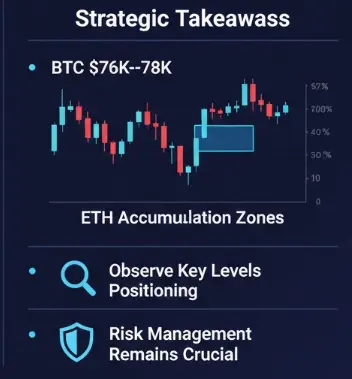
#CryptoMarketWatch
⚡ Market Volatility Intensifies — Bulls vs Bears
Recent weeks have seen heightened crypto volatility, with a growing divergence between bullish and bearish sentiment. Sharp swings in BTC, ETH, and high-cap altcoins are challenging traders to rethink both tactical and strategic approaches.
1️⃣ Technical & On-Chain Observations
Support and Resistance Levels: BTC around $76K–$78K and ETH around $2,000–$2,050 are acting as critical accumulation zones.
Derivative Signals: Futures and options markets are showing increased liquidations, amplifying short-term volatility.
On-Chain F
BTC-4,23%
ETH-5,27%
post-image
  • Reward
  • 4
  • 1
  • Share
DragonFlyOfficialvip:
Hi Baba Ji, your work is really excellent, mashallah. Wishing you great success! 🌟
View More
#FedLeadershipImpact
📊 Macro Factors Are Back in Focus — Are They Shaping Your Crypto Moves?
After months of crypto-centric narratives, macroeconomic indicators such as interest rates, inflation, and equity market trends are again influencing crypto strategy. Traders and investors are re-evaluating positions based on risk appetite, liquidity, and capital rotation.
1️⃣ Key Macro Drivers
Interest Rates: Higher rates reduce risk appetite, affecting BTC, ETH, and high-beta altcoins; lower/stable rates can encourage inflows.
Equity Markets Correlation: Crypto shows moderate correlation with S&P 5
BTC-4,23%
ETH-5,27%
STABLE-5,19%
LONG-4,51%
post-image
  • Reward
  • 4
  • Repost
  • Share
Yusfirahvip:
2026 GOGOGO 👊
View More
#Web3FebruaryFocus
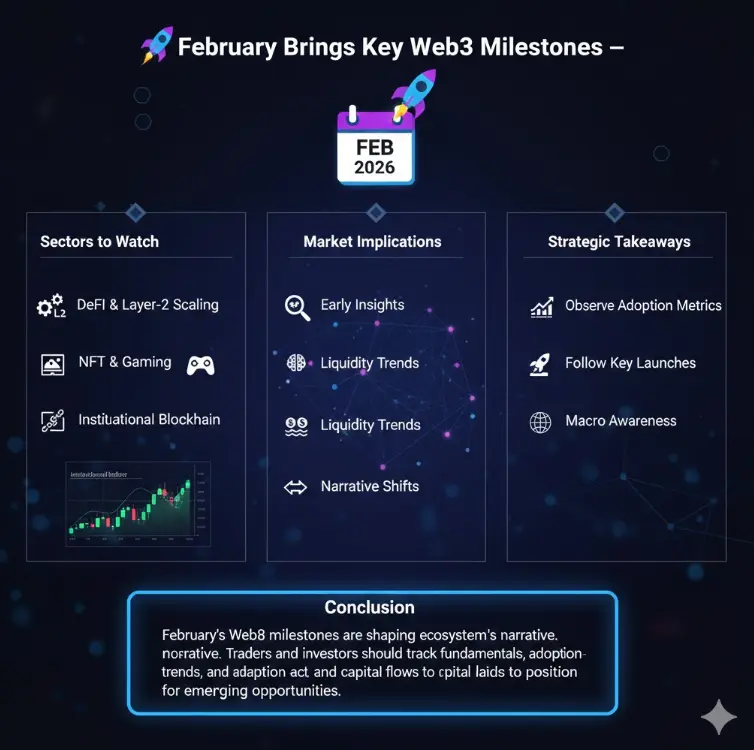
🚀 February Brings Key Web3 Milestones
This February, the Web3 ecosystem is hitting multiple milestones, spanning DeFi, NFTs, Layer-2 adoption, and institutional blockchain integration. Traders and investors should watch emerging narratives closely to anticipate market trends.
1️⃣ Sectors to Watch
DeFi & Layer-2 Scaling: Rising adoption of Ethereum L2s, Arbitrum, Optimism, and zk-rollups.
NFT & Gaming: New launches and collaborations are expanding digital ownership and fan engagement.
Institutional Blockchain: Adoption of tokenized assets, ETFs, and crypto platforms by majo
ETH-5,27%
ARB-4,53%
OP-5,35%
BTC-4,23%
post-image
  • Reward
  • 2
  • Repost
  • Share
Yusfirahvip:
Buy To Earn 💎
View More
#InstitutionalHoldingsDebate
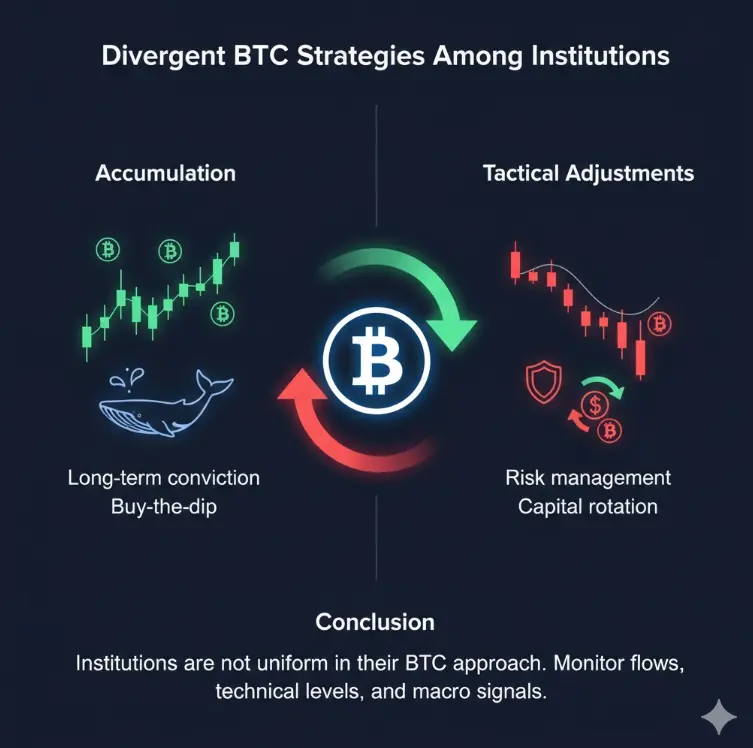
🏦 Divergent BTC Strategies Among Institutions
Recent data shows that institutional BTC strategies are diverging:
Some institutions continue accumulation, taking advantage of dips.
Others face pressure from market declines, prompting tactical adjustments.
1️⃣ Key Observations
Long-term conviction remains: Many institutions maintain strategic positions despite short-term volatility.
Tactical shifts: Some are hedging or rotating capital, balancing exposure with risk management.
On-chain indicators: Whale movements and stablecoin inflows provide clues on accumulation
BTC-4,23%
post-image
  • Reward
  • 1
  • Repost
  • Share
Yusfirahvip:
2026 GOGOGO 👊
#AIExclusiveSocialNetworkMoltbook
🤖 Moltbook Sees Explosive Growth of AI Agents
The AI-only social platform Moltbook is experiencing rapid adoption of autonomous AI agents that interact with each other and users. This growth raises questions about community dynamics, content creation norms, and the role of AI in Web3 ecosystems.
1️⃣ Platform Dynamics
AI agents on Moltbook communicate without human intervention, creating complex interactions and emergent behaviors.
Users can engage with AI agents for content, discussion, and simulation, making the platform highly dynamic.
Web3 integration ens
post-image
  • Reward
  • 2
  • Repost
  • Share
Yusfirahvip:
Buy To Earn 💎
View More
#ChilizLaunchesFanTokens
⚽ Chiliz Launches New Fan Tokens — Bridging Sports & Crypto
Chiliz has officially launched new fan tokens, expanding its blockchain-based ecosystem that allows sports fans to engage, vote, and access exclusive content. This move highlights the growing intersection of crypto, sports, and fan engagement.
1️⃣ Platform & Ecosystem
Chiliz (CHZ) powers fan tokens for major sports clubs, allowing voting rights, rewards, and exclusive experiences.
New token launches diversify the ecosystem, increasing adoption and liquidity for CHZ and partner tokens.
Integrates blockchain tr
CHZ-4,59%
post-image
  • Reward
  • 2
  • Repost
  • Share
Yusfirahvip:
Happy New Year! 🤑
View More
#BitMineAcquires20,000ETH
🏦 BitMine Acquires 20,000 ETH — Institutional Accumulation in Action
BitMine has reportedly acquired 20,000 ETH, signaling a major institutional accumulation move in the Ethereum market. Such purchases reflect confidence in ETH’s long-term fundamentals, network upgrades, and Layer-2 adoption.
1️⃣ Market Context
Scale of purchase: 20,000 ETH represents a substantial inflow into institutional wallets, but remains manageable relative to total circulating supply.
Strategic accumulation: Indicates selective buying at key support zones rather than speculative panic.
Timin
ETH-5,27%
post-image
  • Reward
  • 1
  • Repost
  • Share
Yusfirahvip:
Buy To Earn 💎
#XAIHiringCryptoSpecialists
🤖 XAI is Hiring Crypto Specialists — What It Means for the Industry
XAI has announced plans to hire crypto specialists, signaling a growing convergence between AI innovation and blockchain technology. This move highlights increasing institutional focus on digital assets, talent acquisition, and strategic positioning in emerging markets.
1️⃣ Industry Context
Demand for professionals with crypto, blockchain, and DeFi expertise is surging.
AI-driven platforms like XAI aim to integrate blockchain insights, analytics, and tokenomics into their products.
Strategic hirin
XAI-2,76%
DEFI-11,68%
post-image
  • Reward
  • 2
  • Repost
  • Share
Yusfirahvip:
2026 GOGOGO 👊
View More
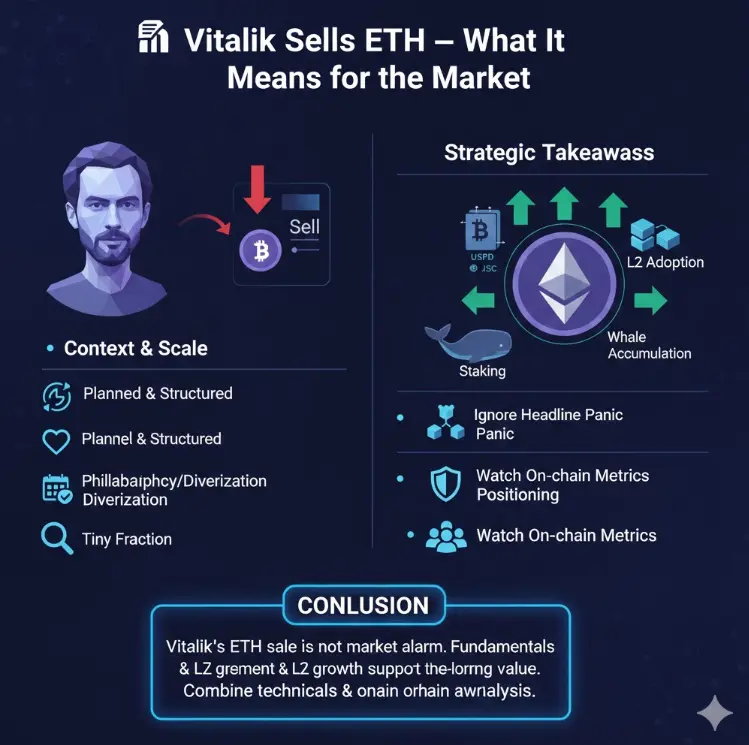
#VitalikSellsETH
🧾 Vitalik Sells ETH — What It Means for the Market
Reports indicate that Ethereum co-founder Vitalik Buterin has sold a portion of his ETH holdings. While headlines can trigger short-term market reactions, understanding the context, scale, and on-chain impact is crucial.
1️⃣ Context & Scale
Vitalik’s ETH sales are reportedly planned and structured, not panic-driven.
Past sales have often been for philanthropy, operational needs, or diversification, rather than signaling loss of confidence.
On-chain analysis shows that these sales represent a tiny fraction of circulating ETH,
ETH-5,27%
post-image
  • Reward
  • 1
  • Repost
  • Share
Yusfirahvip:
2026 GOGOGO 👊
#GoldAndSilverRebound
🪙 Gold & Silver Rebound — Opportunity Amid Market Turbulence
After recent sharp declines, gold and silver prices have staged a rebound, reflecting renewed safe-haven demand and strategic buying by institutions. This V-shaped recovery highlights the importance of key support levels, macro catalysts, and liquidity flows.
1️⃣ Price & Technical Analysis
Gold: Rebounded from $5,100–$5,150/oz support, now testing $5,250–$5,300 resistance.
Silver: Recovering from $108–$110/oz, showing relative strength compared to gold during the bounce.
Technical Signals: RSI indicates overso
post-image
post-image
post-image
  • Reward
  • 1
  • Repost
  • Share
Yusfirahvip:
Buy To Earn 💎
  • Pin

Trade Crypto Anywhere Anytime
qrCode
Scan to download Gate App
Community
  • 简体中文
  • English
  • Tiếng Việt
  • 繁體中文
  • Español
  • Русский
  • Français (Afrique)
  • Português (Portugal)
  • Bahasa Indonesia
  • 日本語
  • بالعربية
  • Українська
  • Português (Brasil)